
Get In Touch
2026.07.27
Posted By: Peter
You’re evaluating a commercial opportunity in the family entertainment space. The trampoline park market is projected to grow at a CAGR of over 7%, with valuations estimated to reach approximately $2.5 billion by 2033. A Trampoline park isn‘t just a place for kids to bounce—it’s a versatile entertainment hub that serves multiple customer segments and generates revenue through multiple channels. From birthday parties and corporate team-building to fitness classes and casual walk-ins, the revenue potential is significant.
This guide covers what makes a trampoline park a sound commercial investment—from market opportunity and equipment selection to safety standards, layout design, and ROI expectations. For family entertainment center operators and commercial investors, this is a practical framework for building a profitable indoor attraction. With industry expertise and proven turnkey solutions, successful trampoline parks are built on a foundation of quality equipment, thoughtful design, and reliable support.
The business case for trampoline parks is built on strong market fundamentals.
The trampoline park industry is experiencing sustained growth. Industry reports suggest the average annual revenue for an indoor trampoline park can be between $1 million and $3 million USD. This revenue comes from a diverse customer base that spans all age groups—families with young children, teenagers seeking social activities, and adults looking for fitness alternatives.
A well-operated trampoline park generates income from multiple sources: admission fees, party bookings (birthday parties, school outings, corporate events), fitness classes, and additional services like food and beverage or merchandise sales. This diversification reduces reliance on any single revenue stream and creates a more resilient business model. Family entertainment centers with diverse attractions often achieve faster break-even than single-attraction venues.
Unlike single-purpose entertainment venues, trampoline parks attract visitors across generations. Children love the excitement and playfulness. Teenagers and young adults enjoy the social aspect and active games. Adults visit for fitness classes or family outings. This broad appeal translates into higher throughput and more consistent visitation across weekdays and weekends.
The quality and variety of equipment directly impact safety, guest experience, and long-term profitability.
The trampoline setup is the foundation of any park. Wall-to-wall trampolines, along with specialized areas like foam pits, dodgeball courts, and basketball hoops, represent the core investment. Equipment costs typically range from $50,000 to $200,000 or more, depending on the size and complexity of the design. High-quality trampolines from reputable manufacturers are essential for safety and durability.
Parks that offer more than just trampolines generate higher guest satisfaction and longer visit durations. Modern trampoline parks include a mix of attractions: open jump zones for free-form bouncing, foam pits for practicing flips and jumps, dodgeball courts for competitive fun, ninja warrior courses for agility challenges, and climbing walls for variety. Equipment from experienced manufacturers integrates diverse play zones like toddler areas, trampolines, and climbing walls, using high-quality materials that meet global standards.
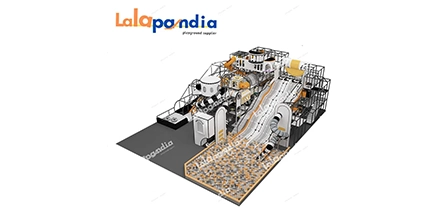
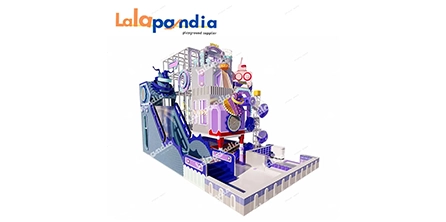
Customization creates a unique identity that competitors can‘t easily replicate. Options include custom color schemes, branded equipment, and themed zones—sci-fi, jungle, fantasy—that add immersive storytelling layers. Leading manufacturers offer complete customization, from 3D modeling and prototyping to production and installation.
Safety is the foundation of any commercial trampoline park. No amount of visual appeal compensates for unsafe equipment.
Commercial trampoline equipment must meet rigorous safety standards. Quality equipment complies with EN ISO 23659:2022 (European) and ASTM F2970 (U.S.), covering design, installation, operation, and maintenance. Additional certifications include ASTM F1918-21, EN1176-1:2017+A1:2023, and EN 71 standards. SGS testing provides independent verification of compliance.
High-traffic parks need long-lasting equipment. Key materials include heavy-duty steel frames that maintain stability during heavy use, professional jumping mats with spring covers to prevent injuries, high-density EPE foam blocks with fire resistance meeting ASTM standards, and durable 1000D high-density PVC that is easy to clean and maintain. Rust-proof frames and robust springs ensure consistent performance over time.
Padding for trampoline edges, safety nets, and protective mats are essential for injury prevention. Clear rules, trained staff, and proper safety orientations further reduce risks. Parks that prioritize safety build trust with families and generate repeat visitation.
The physical layout of a trampoline park affects safety, guest experience, and operational efficiency.
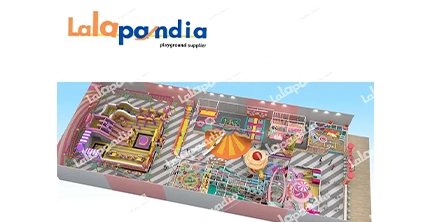
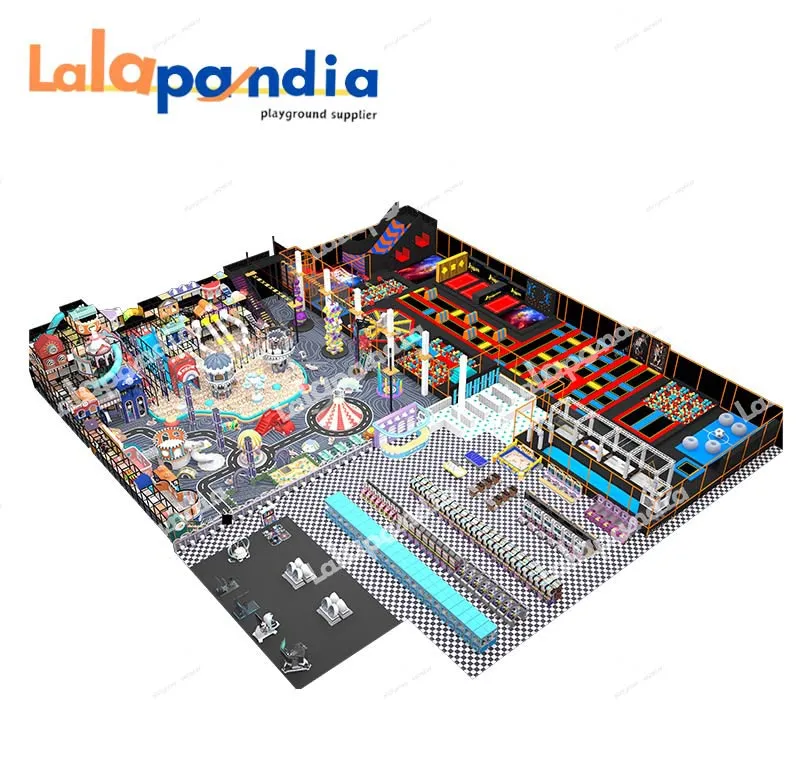
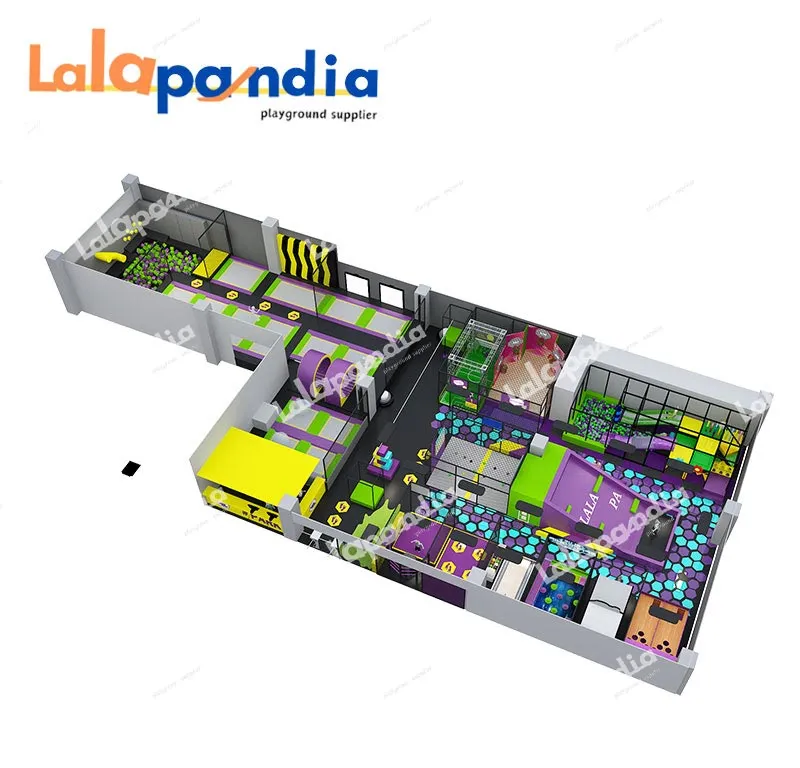
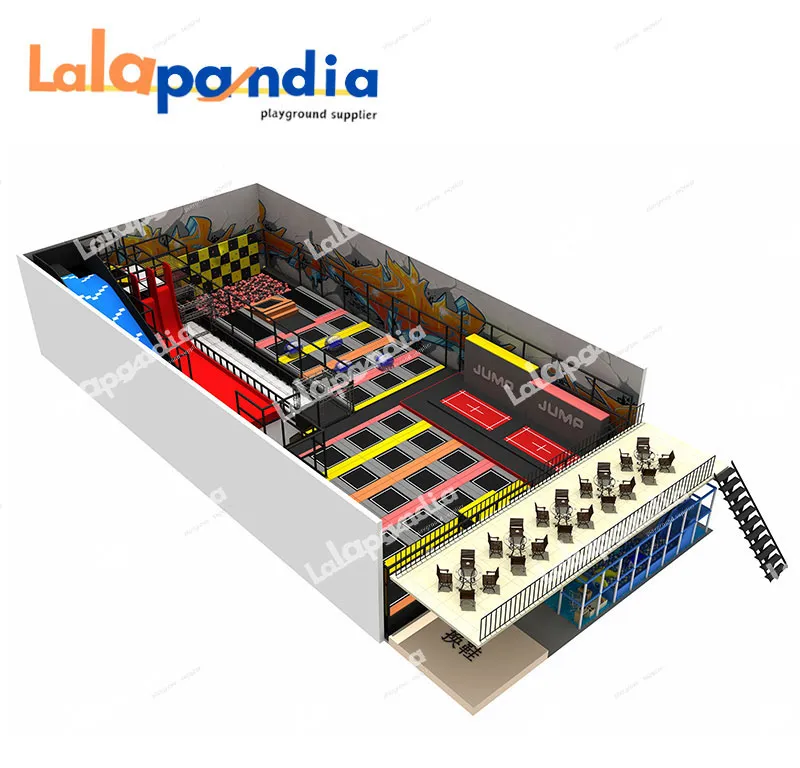
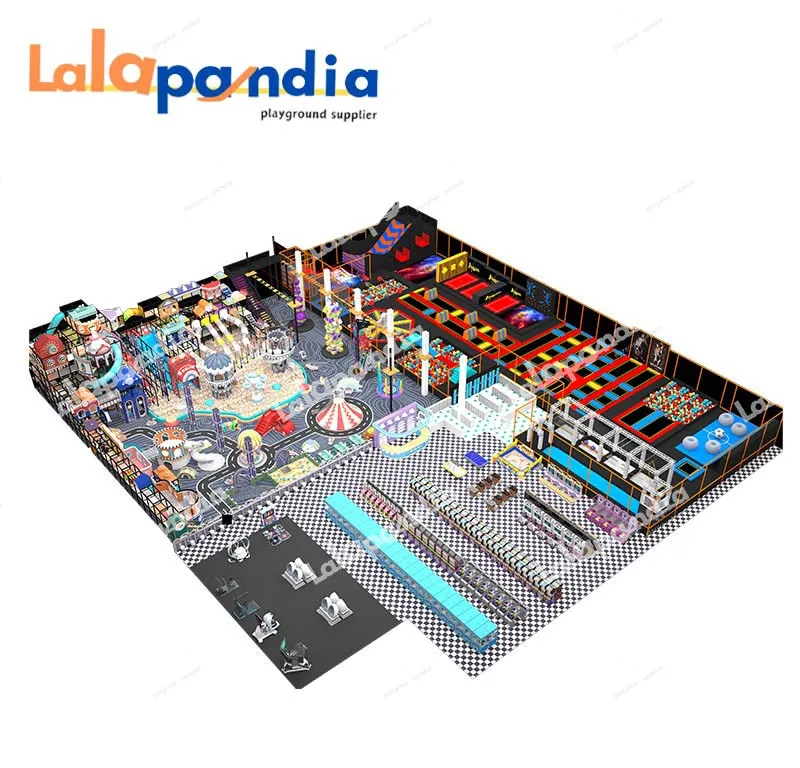
A well-designed park separates areas for different activities: open jump zones, dodgeball courts, foam pits, and adventure areas. This zoning prevents chaos, reduces collisions, and caters to different interests. Age-specific sections—toddler zones with smaller trampolines and softer surfaces—ensure younger kids stay safe.
A typical trampoline park requires a large area, usually ranging from 5,000 to 20,000 square feet or more. Ceiling height must accommodate activities like slam dunks or rope courses. The layout should allow easy movement, avoid overcrowding, and provide clear pathways to reduce tripping hazards.
Clear pathways and visible exits improve emergency response and enhance the guest experience. Thoughtful placement of rest areas, cafes, and spectator zones increases dwell time and additional spending. Modern modular systems transform any indoor space into a dynamic environment where bouncing, climbing, and problem-solving converge.
Understanding the financial picture is essential for making an informed investment decision.
Launching a commercial trampoline park typically requires an initial capital expenditure ranging between $300,000 and $500,000, primarily for equipment and site preparation. For larger facilities, investments can range from $500,000 to $2 million, depending on location, size, and level of customization. The equipment itself—trampoline systems, safety equipment, and additional attractions—represents a significant portion of this investment.
Typically, a trampoline park‘s ROI timeline ranges between 18 to 36 months, depending on location, investment size, and operational model. Well-managed parks with diversified revenue sources reach break-even faster. For well-operated parks with prime locations and efficient operations, investment return periods often range from 2 to 3 years.
Premium equipment and diversified attractions typically yield higher ROI over five years than lower-cost alternatives. Investing in durability reduces long-term repair costs and maintenance frequency. Leading manufacturers provide end-to-end solutions from design to after-sales, with lifetime technical support and comprehensive warranties on equipment.
| Factor | Consideration | Impact on ROI |
|---|---|---|
| Equipment Quality | Premium vs. budget | Lower TCO over 5+ years |
| Attraction Mix | Diversified vs. single-type | Higher per-visit spend |
| Location | Prime vs. secondary | Higher foot traffic |
| Safety Standards | Certified vs. uncertified | Lower liability risk |
| Customization | Themed vs. generic | Stronger brand identity |
What is the minimum space required for a trampoline park?
A typical trampoline park requires between 5,000 and 20,000 square feet. Smaller parks can operate in as little as 2,000-3,000 square feet with compact layouts, but larger spaces allow for more diverse attractions and higher guest capacity. Experienced manufacturers offer customizable solutions that can fit spaces of various sizes, from small venues to large-scale family entertainment centers.
How long does it take to recoup the investment?
Most trampoline parks achieve ROI within 18 to 36 months. Well-operated parks with diversified revenue streams often reach break-even faster, typically within 2 to 3 years. The key factors are location, equipment quality, operational efficiency, and the mix of revenue sources. Parks that offer party packages, fitness classes, and F&B services generate higher returns than those relying solely on admission fees.
What are the most important safety certifications to look for?
Look for equipment that complies with ASTM F2970 (U.S.) and EN ISO 23659:2022 (European) standards. Additional relevant standards include ASTM F1918-21, EN1176-1:2017+A1:2023, and EN 71. SGS certification provides independent verification of compliance. These certifications cover design, installation, operation, and maintenance of trampoline park equipment.
How can I differentiate my trampoline park from competitors?
Customization is key. Themed zones—sci-fi, jungle, fantasy—create immersive experiences that generic parks can‘t match. Diversified attractions beyond just trampolines—ninja courses, climbing walls, soft play areas—keep visitors engaged longer. Leading manufacturers offer complete customization from 3D modeling to installation, allowing you to create a unique brand identity that encourages social media sharing and repeat visitation.
A trampoline park is more than an Build a Trampoline Park That Delivers Resultsentertainment venue—it‘s a commercial asset with proven revenue potential. The right equipment, rigorous safety standards, thoughtful layout, and diversified attractions create a destination that attracts families, teens, and fitness enthusiasts alike. The market is growing. The demand is proven. With the right partner and the right approach, a trampoline park can deliver strong returns for years to come.
LALAPANDIA is an experienced indoor playground equipment manufacturer and supplier with over 10 years of industry experience and 600+ annual sales projects. The company designs, manufactures, and installs custom trampoline parks and play areas for family entertainment centers, shopping malls, and commercial venues worldwide. All equipment complies with EN and ASTM safety standards, with SGS and TÜV certification. LALAPANDIA provides turnkey solutions from concept to installation, including 3D design, manufacturing, global logistics, on-site installation, and after-sales support.
Contact LALAPANDIA‘s team to discuss your space, budget, and target audience—they can provide custom design consultations, 3D renderings, and detailed quotes for your trampoline park project.
GET A QUOTE
 中文
中文 English
 Pусский
 Français
 Español