
Get In Touch
2026.04.07
Posted By: Peter
You’ve secured the budget, gathered stakeholder buy-in, and envisioned the laughter of children echoing through a vibrant new play zone. But when it comes to sourcing commercial-grade gear, the path from vision to a successful, safe installation is often littered with costly oversights.
From community rec centers to bustling family entertainment venues, the pressure to launch quickly and under budget frequently leads to the same expensive mistakes. Based on industry post-installation audits and feedback from facility managers, here are the three most common—and preventable—financial missteps when buying commercial playground gear.
It’s the oldest procurement trap: choosing the vendor with the lowest upfront price tag. A community center in the Midwest learned this the hard way. They saved 18% on the initial purchase, only to spend 35% of that “savings” on part replacements and structural welding within the first 18 months.
Low-quality gear often uses thinner gauge steel, non-UV-treated plastics, and generic fasteners that corrode. The result? Accelerated wear, faded panels, and potential sharp edges. When you calculate the total cost of ownership (purchase + maintenance + replacement parts + potential downtime), the “cheap” option is almost always the most expensive.
How to avoid it: Request material specifications in writing. Look for closed-cell foam padding, spun aluminum discs on rotating components, and 304 stainless steel hardware. For a detailed breakdown of long-life material certifications, you can view the technical specs here.
Here’s a scenario that plays out far too often: A new indoor play structure is installed, looks fantastic, and opens to rave reviews. Then, an incident occurs. The investigation reveals that a critical fall zone used the wrong impact-attenuating surface, or a climbing net had an opening that violated ASTM F1487 standards.
Suddenly, you’re not just facing repair costs; you’re facing liability claims and potential shutdowns. The assumption that “all commercial gear meets standards” is a dangerous one. Many budget manufacturers self-certify with vague statements, but lack third-party validation.
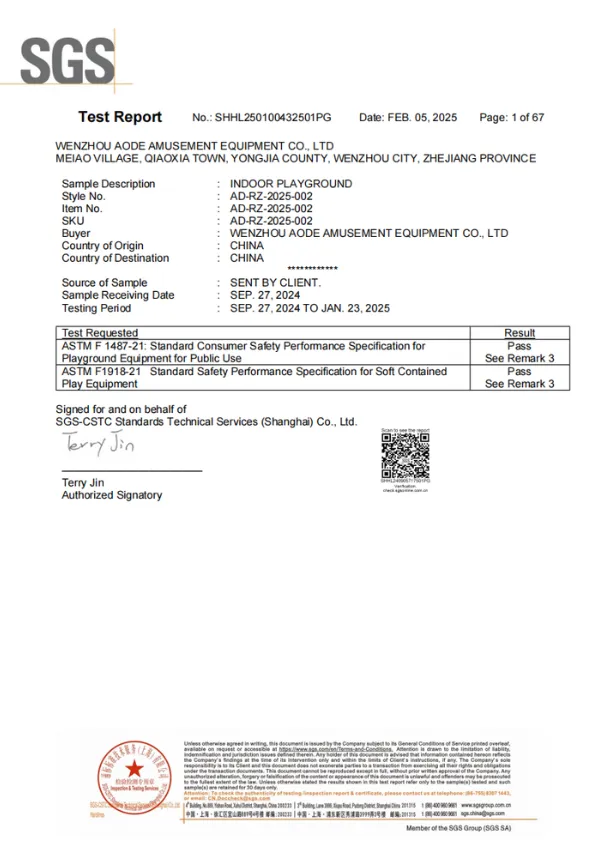
How to avoid it: Demand proof of third-party testing from an accredited lab like IPEMA. Specifically, review the report for head entrapment, protrusion, and entanglement hazards. If a vendor hesitates or provides a “generic” certificate, walk away. Understanding how these standards translate to real-world layouts is critical—you can explore standard-compliant design principles here for your upcoming project.
Your room measures 30’ x 40’. So you buy a 25’ x 35’ structure. Perfect, right? Wrong. The most overlooked mistake is forgetting the “operational envelope.”
This includes:
Clearance zones: The 7’6” of open space required above the highest platform.
Supervision sightlines: Can staff see into every corner and cubby?
Maintenance access: Can a technician reach the central panels without dismantling half the unit?
Future expansion: Is the system modular, or will you need to buy a whole new unit to add a slide or climbing element next year?
We’ve seen facilities forced to block off one-third of their purchased structure because it impinged on an emergency egress route, or scrap a “custom” non-modular unit entirely when they wanted to refresh the space after two years.
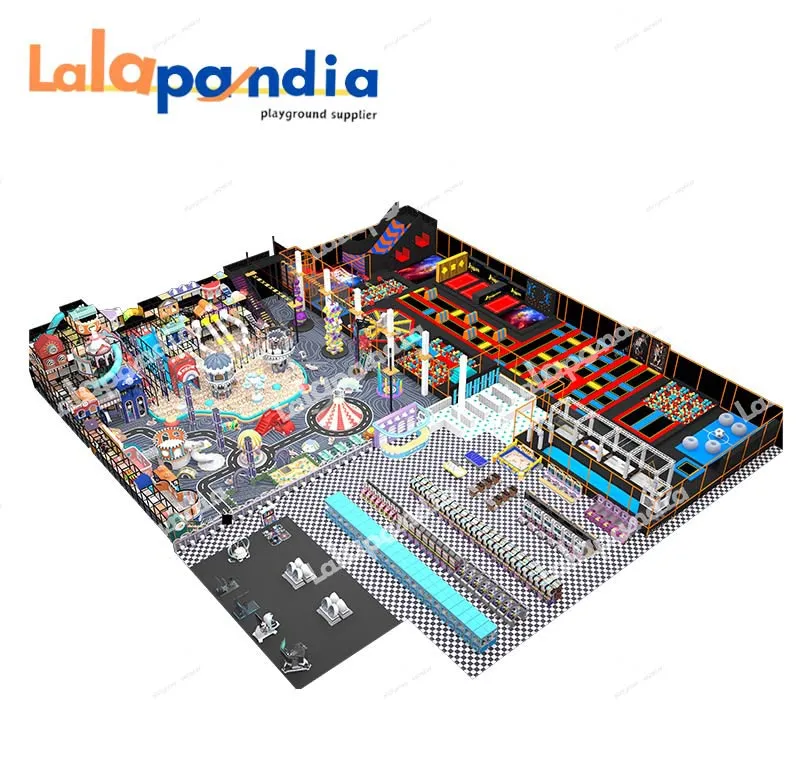
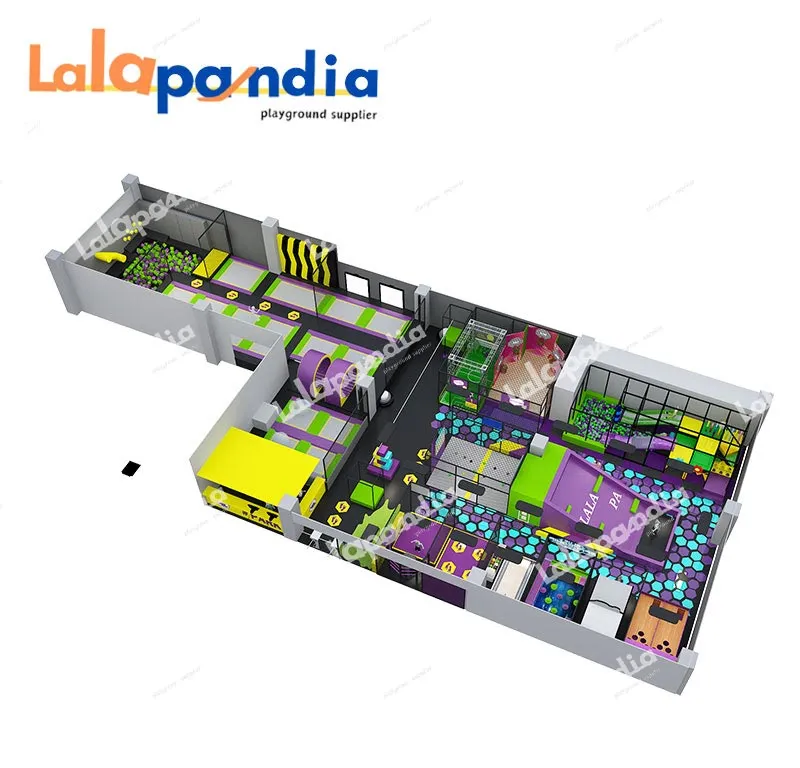
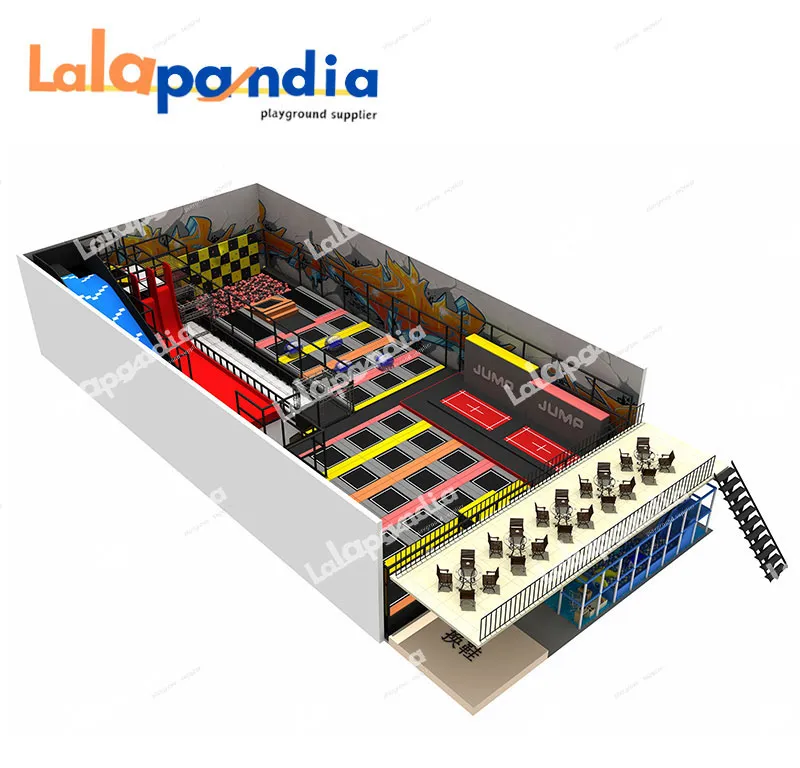
How to avoid it: Always request a scaled 2D layout and a 3D rendering that includes your room’s full dimensions, columns, and ceiling height. Prioritize modular systems where components (decks, slides, tunnels) follow a standard connection interface. If you’re unsure how to calculate your true usable square footage, access a free space-planning checklist used by professional installers.
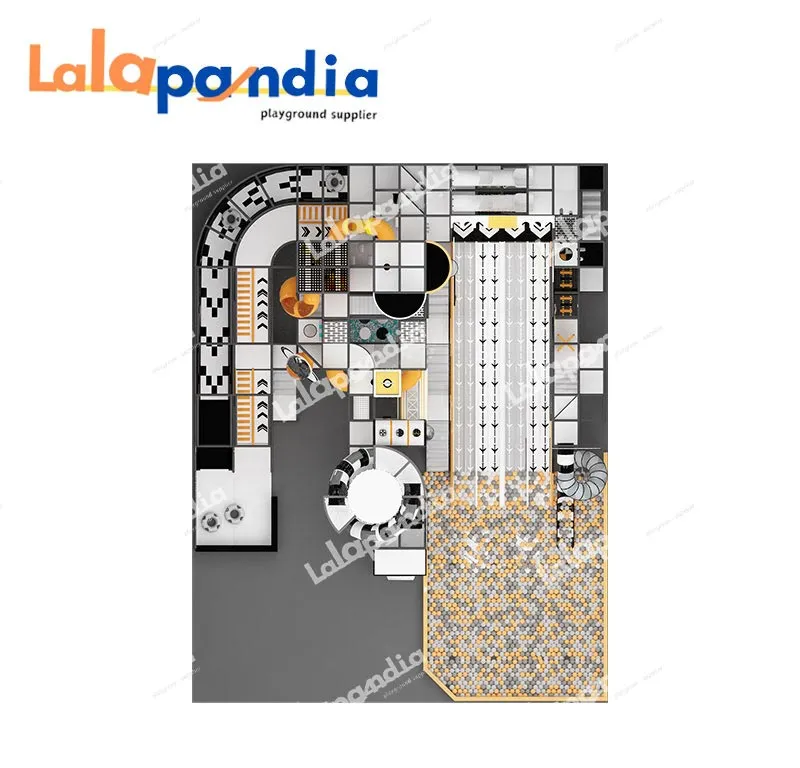
Avoiding these three mistakes doesn’t require a degree in engineering—it requires a supplier who treats safety and longevity as non-negotiable standards, not upcharges.
At LaLapandia, the approach is built on transparency and technical precision. Instead of vague promises, you receive full material traceability, IPEMA-certified test reports, and modular designs that adapt to your space and future growth. The goal is simple: deliver commercial playground gear that reduces your risk, simplifies maintenance, and keeps the focus where it belongs—on active, joyful play.
If you are currently evaluating options for your next project and want to avoid these costly missteps, request a personalized consultation and compliance pack.
Ask any potential supplier these three questions before signing a contract:
“Show me the third-party ASTM/EN test report for this exact model.”
“What is the guaranteed availability period for spare parts?”
“Provide a total landed cost including shipping, assembly tools, and first-year maintenance.”
GET A QUOTE
 中文
中文 English
 Pусский
 Français
 Español