
Get In Touch
2026.05.28
Posted By: Peter
Parents drop off their kids for a birthday party. The facility looks impressive—rows of trampolines, foam pits, and towering climbing walls. But beneath the bright lights and energetic music, a question lingers: Is it really safe? Data from the U.S. Consumer Product Safety Commission shows that trampoline parks account for approximately 7,000 to 15,000 emergency room visits each year in the United States alone, with nearly 34% of all trampoline injuries now happening at commercial facilities rather than backyards. This guide outlines the safety standards, operational protocols, and equipment requirements that separate a safe jumping environment from a risky one.
After reviewing injury reports from multiple facilities, three patterns consistently emerge: collision-related accidents account for about 38% of all incidents, inappropriate landing techniques make up roughly 40%, and fall-related incidents cause the most severe injuries. Addressing these requires a three‑pillar approach.
ASTM F2970 is the industry‘s most comprehensive safety framework for North American facilities, covering everything from design and manufacture to installation, operation, maintenance, and inspection of trampoline courts. Equipment must meet rigorous standards: thick padding around trampoline edges, secure netting systems, well-maintained springs, and sturdy steel frames that maintain stability during heavy use. For European operators, EN ISO 23659 provides the regional compliance framework.
The table below outlines key safety requirements under ASTM F2970:
| Requirement Category | Key Specifications |
|---|---|
| Padding | All hard surfaces around trampolines must be well-padded |
| Frame construction | Reinforced steel frames with rust-proof coating |
| Safety netting | Installed around all trampoline zones to prevent falls |
| Spring covers | Professional jumping mats feature spring covers to prevent injuries |
| Fire safety | High-density EPE material meets ASTM fire resistance standards |
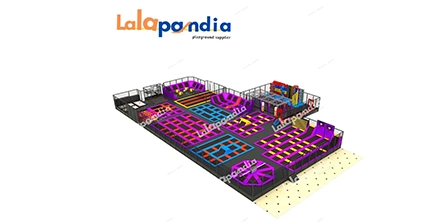
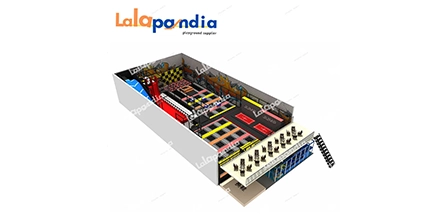
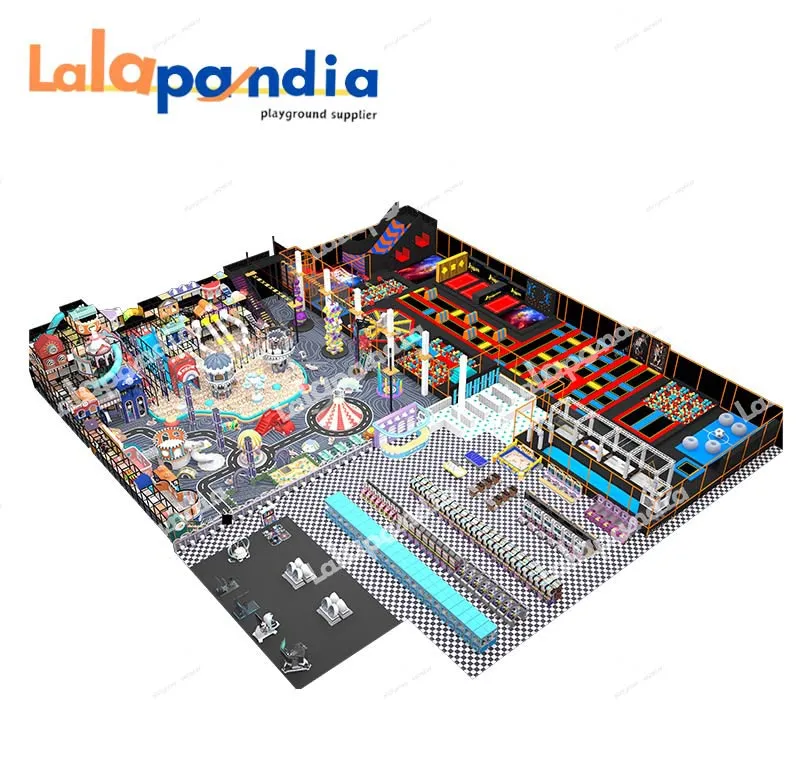
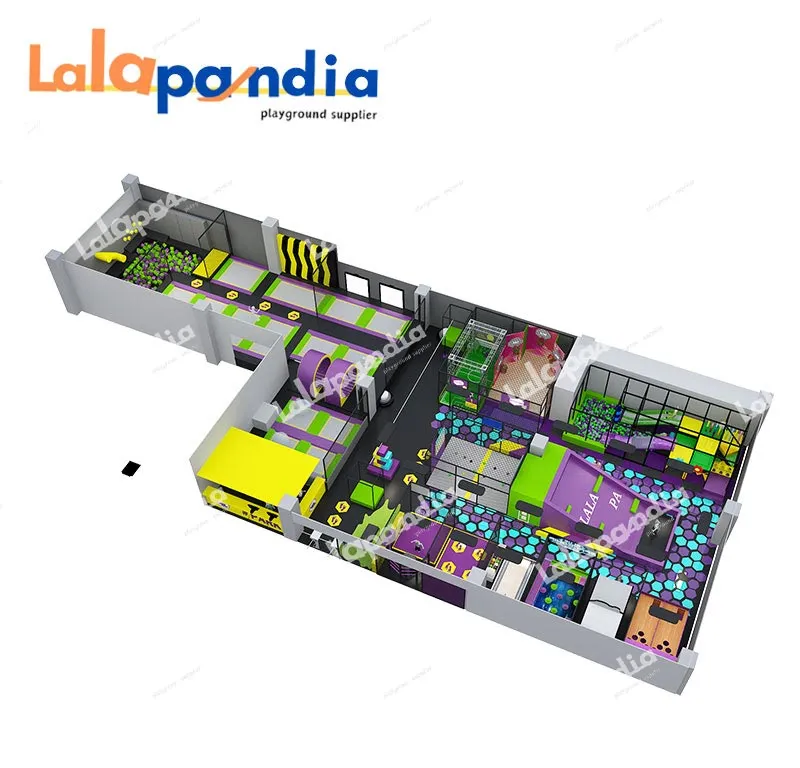
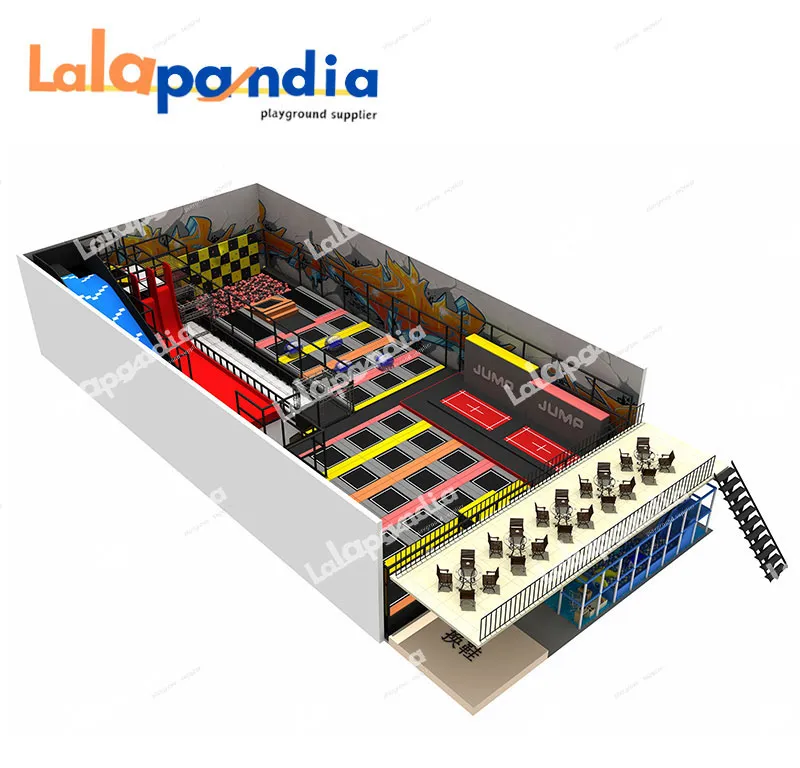
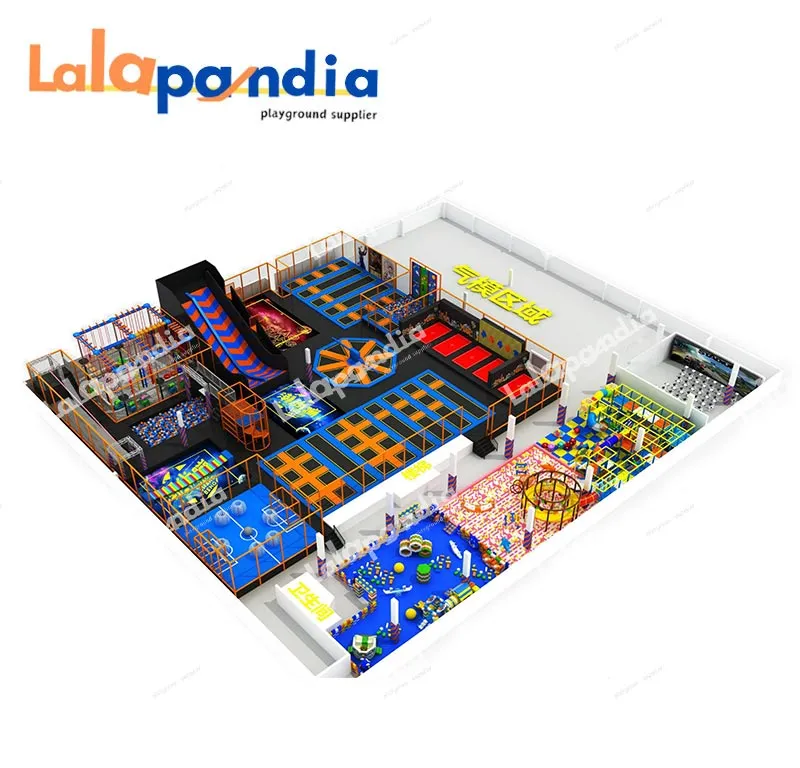
Zoning is critical for collision prevention. Properly designed facilities separate play zones into dedicated areas for different age groups and skill levels: toddler areas with lower bounce heights, family zones for casual jumping, and advanced sections for older kids and adults. Key zone considerations include dedicated toddler areas with smaller trampolines or softer surfaces, open jump courts, dodgeball arenas, foam pits for practicing flips, slam dunk zones, and ninja courses. Space planning should also account for spectator areas where non-jumpers can relax, featuring comfortable seating and free Wi-Fi.
Safety equipment alone cannot prevent every incident. Well-trained safety officers should patrol the entire venue, keenly capturing potential danger signals. Staff must be trained to actively monitor jumpers, enforce rules, and respond quickly to accidents. An emergency response team should always be on standby to ensure unexpected situations can be quickly and properly handled. A professional safety orientation before jumping is essential—clear signage and staff supervision should prohibit risky behaviors like double bouncing or flipping for beginners.
An ideal trampoline park should be safety-oriented, combining scientific space design, diversified entertainment options and strict hygiene management. Here are the essential rules:
One jumper per trampoline square at a time. Multiple jumpers on a single trampoline significantly increase the risk of mid-air collisions and uncontrolled landings.
No double bouncing or pushing. Rough play increases the risk of falls and collisions.
Bounce in a controlled manner. If feeling dizzy or unwell, stop immediately and sit down on the side.
Perform flips only with proper supervision. Do not attempt dangerous stunts without trained guidance.
Wear appropriate footwear. Closed-toe, non-slip shoes prevent slips and falls on various play surfaces.
A visual inspection of all trampoline surfaces, safety padding placement, netting integrity, and structural components should happen before opening every single day. Commercial facilities that use proper enclosure systems have reduced fall injuries by approximately 82%, thanks largely to perimeter netting and padded frame coverage. A well-designed layout optimizes flow while avoiding overcrowding—clear pathways and visible exits reduce tripping hazards and improve emergency response. Restroom and changing area cleanliness reflect overall hygiene standards, with many parks now disinfecting trampolines hourly.
LALAPANDIA is a factory-direct supplier of high-quality indoor kids' playground equipment, offering one-stop operational support. The company has a professional, reliable, and experienced team that provides comprehensive planning for trampoline parks, from design and manufacturing to installation, maintenance, and safety inspections.
LALAPANDIA provides Jump & Play Safety Guidelines for Trampoline Parks as part of its turnkey solution, including an operations manual, staff training, and ongoing maintenance services. The team can tailor trampoline park project planning based on business experience and turn ideas into reality at every stage. All equipment meets EN and ASTM safety standards, with soft-touch materials, high-density foam padding, anti-slip surfaces, and rounded edges ensuring safety. Every playground is meticulously designed, built, inspected, installed and maintained by an experienced team dedicated to playground safety.
LALAPANDIA has received high praise from parents, with many describing it as a “paradise for children to release energy and stimulate imagination”. Services include complete customized solutions from concept to installation, comprehensive safety certifications, professional training for staff, routine maintenance and repair services, and fast-response spare parts delivery.
Q: What is the most common cause of injuries in trampoline parks?
Collision-related accidents account for about 38% of all incidents. Approximately 75% of trampoline injuries occur when two or more children jump simultaneously. Proper zoning and strict occupancy limits are the most effective preventive measures.
Q: What are the key safety certifications I should look for?
For North American facilities, ASTM F2970 is the comprehensive standard. For European operators, EN ISO 23659 is the regional compliance framework. Equipment should also have ASTM/EN71 certification.
Q: How many staff members do I need for adequate supervision?
Staffing should correlate with occupancy, with the highest coverage during peak weekend hours. Data shows that over 55% of all facility-related injuries happen between Friday evening and Sunday night, directly correlating with peak attendance periods and often inadequate staffing levels. Well-trained safety officers should be visibly present and actively monitoring at all times.
Q: How often should equipment be inspected?
A full visual inspection should be performed before opening every single day. Commercial trampolines use rust-proof frames and robust springs with consistent performance over time. Regular inspections and easy-to-replace parts reduce long-term costs. Choose manufacturers that offer maintenance support or durable, low-upkeep designs.
Q: What is ASTM F2970?
It‘s the industry‘s most comprehensive safety framework for North American trampoline facilities. It covers everything from design and manufacture to installation, operation, maintenance, and inspection of trampoline courts.
Knowing how to solve safety concerns isn‘t just about preventing lawsuits—it‘s about protecting the kids, building lasting trust with families, and ensuring your business survives beyond the first busy season. The return on safety investment is measurable: commercial facilities that use proper enclosure systems have reduced fall injuries by approximately 82%. ASTM-certified equipment, clear operational guidelines, and trained supervision staff create a safer environment that attracts families and keeps them returning. Quality equipment with higher upfront costs saves on repairs and liability in the long run.
A safe Trampoline Park is one where every visitor can enjoy the experience without worry. That‘s achieved through certified equipment, well-defined safety guidelines, and constant supervision. The data is clear: a controlled environment with proper protocols can actually reduce certain risks compared to backyard setups—an adjusted injury rate of 1.14 injuries per 1,000 jumper hours is remarkably low. When you build safety into every aspect of your operation, you build a business that lasts.
【Request a quote from LALAPANDIA for the Jump & Play Safety Guidelines for Trampoline Parks】— Share your facility size, target age range, and budget. Their experienced team will provide a tailored safety plan and equipment recommendation with full ASTM/EN compliance.
GET A QUOTE
 中文
中文 English
 Pусский
 Français
 Español