
Get In Touch
2026.06.01
Posted By: Peter
A new indoor playground opens. The first month brings crowds. Then attendance drops. The equipment works—it just isn‘t memorable. The difference between a flash‑in‑the‑pan and a community destination often comes down to the indoor playground equipment itself. A generic soft play area keeps kids occupied, but a well‑designed castle‑themed structure keeps them wanting to return. By embedding interactive puzzles, hidden passageways, and multi‑level challenges into the structure, operators can extend the average visit by 30–45 minutes and boost repeat visits. This guide explains what separates a castle‑themed children‘s paradise from a basic play structure, how the materials and construction affect long‑term reliability, and what to look for when you plan your next indoor play space.
The magic of a castle playground isn‘t the slides or ball pits alone—it’s the puzzle woven through the structure. An adventure maze combines physical activity with mental challenges, using interconnected tunnels, bridges, and hidden passageways to stimulate curiosity and problem‑solving. For young children, completing a maze on their own feels like an accomplishment, which drives repeat visitation.
Interactive puzzle elements like matching panels, treasure chests, and movable blocks extend this engagement. When a child doesn‘t solve the puzzle on the first try, they want to come back and try again. Transparent windows, peek holes, and hidden surprises keep the space visually dynamic even between visits. The maze’s layout encourages teamwork, allowing children to navigate with friends or siblings—turning a play session into a social experience that parents are more likely to return for. Soft padding and safety features ensure children can explore without risk, while vibrant colors and themed decorations keep the experience fresh for return customers.
A well‑designed maze creates a journey, not just a space. Instead of a single open room where children see all activities at once, a maze with multiple paths and dead ends encourages exploration. Children spend more time navigating because they can‘t see the end from the start. For operators, this translates directly into longer average visits. Data from mall‑based playgrounds shows that mazes with 3–4 decision points increase visit duration by 30–45 minutes compared to open layouts. The key is balancing complexity—too simple, and children finish quickly; too difficult, and they become frustrated. The recommended approach is a “goldilocks” maze with progressive difficulty: easier paths for younger children, more challenging routes for older kids.
Puzzles create an “incomplete” experience. When a child doesn‘t solve a matching panel or find all the hidden treasure chests, they leave wanting to return. This psychological principle—called the Zeigarnik effect—means that people remember unfinished tasks better than completed ones. By embedding 3–5 interactive puzzles per 100 m² of play space, operators can significantly increase the likelihood that a family will purchase a monthly pass rather than a single entry ticket. The puzzles don‘t need to be complex. Simple color‑matching panels, shape‑sorting stations, and find‑the‑hidden‑object challenges are effective. The key is making puzzles solvable within a single 60–90 minute visit but not too easy so that children feel they’ve mastered everything.
Square footage is fixed; vertical space is not. A castle playground offering 1–4 levels of three‑dimensional space planning effectively increases capacity without expanding the building footprint. A two‑level structure doubles the playable area, while four levels—with climbing nets connecting them—can accommodate 50–100 children simultaneously in the same 300–400 m² footprint. For shopping malls and family entertainment centers where rent is calculated by the square meter, this efficiency directly impacts profitability. The maze design encourages children to move upward and downward through the structure, distributing traffic and preventing congestion at any single attraction. An operator running a 450 m² indoor playground saw the number of visitors increase by 40% in the first month after installation, primarily because the multi‑level layout handled peak‑hour crowds without feeling overcrowded.
The equipment you buy today will be climbed, jumped on, and occasionally abused for years. Material selection determines whether your indoor playground equipment lasts 8–15 years or needs replacement in 3. The main structural components—steel and aluminum alloy trusses—use 30×30 cm aluminum base tubes with eco‑certified non‑toxic color powder coat for corrosion resistance. Connector springs and buckles are made from high‑strength, corrosion‑resistant metal alloy, with spring steel wire that withstands repeated tension cycling.
Padding and surfacing protect children from falls. High‑density EPE foam blocks meet ASTM fire resistance standards. Professional jumping mats are made from PP material with spring covers that prevent injuries and extend mat life. PVC leather wrap uses 1000D high‑density fabric at 0.45 mm thickness, available in bright or matte finishes—easy to clean, waterproof, and oil‑proof.
Knitted netting provides support and impact resistance in climbing zones and obstacle courses. Cable ties with strong locking buckles secure the netting without sharp edges.
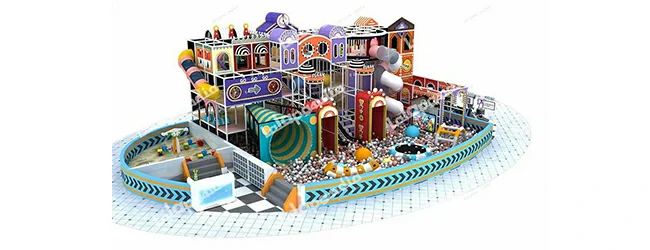
The specific castle‑themed structure, the Indoor Naughty Castle Children‘s Paradise, is designed for age 5+ with child capacity of 50–100 and 1–4 levels of three‑dimensional space planning, including climbing frames, tunnels, ball pools, straight/spiral/wave slides, rocking horses, sand pools, and trampolines.
Safety certification isn‘t just regulatory compliance—it’s liability protection. When a child gets injured, the first document a lawyer asks for is the equipment‘s safety certification. LALAPANDIA‘s equipment is certified to meet EN (Europe), ASTM (US), UL94 (US), and ISO standards. Specific components carry SGS certifications: EN trampoline, ASTM playground, ASTM trampoline, plus flame retardant test reports, EN71 reports for marine balls, and RoHS and chemical reports. For operators, these certifications mean that if an accident occurs, the liability rests with proper operation and supervision, not with defective equipment. The 2‑year limited warranty against defects in workmanship and materials provides additional financial protection—a crucial consideration when budgeting for a commercial playground that needs to operate 3,000+ hours annually.
Q: How long will my indoor playground equipment last?
A: Indoor playgrounds average 8–15 years of service life. LALAPANDIA‘s products use quality materials to extend lifespan, but actual longevity depends on maintenance frequency and daily usage. The company offers a 2‑year limited warranty against defects in workmanship and materials.
Q: Does the supplier provide replacement parts when something wears out?
A: Yes. Replacement parts are available for natural wear and tear. Common replacement items include springs, safety netting, jumping mats, and PVC covers. If a specific part isn‘t listed, the manufacturer can identify the correct component with photos and part descriptions via customer service.
Q: Can the same castle design be customized for different building sizes?
A: Yes. The castle concept is fully customizable. The design process starts with communicating needs and sharing success cases, then in‑depth project understanding (preferred theme, color scheme, core experience, target age group, and budget). The team reviews client‑provided materials like site plans and architectural drawings before creating 2D layouts and 3D concept designs.
Q: What’s the maintenance schedule for a commercial indoor playground?
A: LALAPANDIA recommends semi‑annual maintenance, though for most customers they provide maintenance resources rather than on‑site service. Daily checks include inspecting fasteners (loose bolts, missing hardware, damaged components), cleaning surfaces, and checking netting for tears. Weekly checks include inspecting foam padding for compression, tightening structural fasteners, and verifying netting tension. Monthly checks include applying lubricants to moving parts, inspecting plastic components for cracks, and testing guardrail stability.
A shopping mall installed a castle‑themed indoor playground in a 450 m² space. The operator‘s challenge was typical: convert casual foot traffic into repeat customers and maximize revenue per square foot. The solution was a 1–4 level design with maze integration and puzzle elements embedded throughout the structure. In the first month of operation, the number of visitors increased by 40%. Parents reported that children specifically asked to return because they hadn‘t “finished” the maze or solved all the puzzles. The multi‑level layout handled peak‑hour crowds without feeling overcrowded, and the safety‑certified construction gave parents confidence. The success case demonstrates that equipment choice directly affects key performance indicators—not just child safety.
Knowing when to repair versus when to replace components saves money and maintains safety. Repair when: springs lose tension but aren’t broken; foam padding shows minor compression (<25%); PVC covers have surface scratches but no tears; netting has small holes (<3 cm). Replace when: springs are broken or rusted through; foam is compressed >50% and no longer returns to shape; PVC covers have large tears exposing foam; structural bolts are missing or corroded; netting has large tears or multiple small holes in the same area; plastic slides develop cracks at stress points.
Critical failure. If the equipment has structural cracks, widespread material fatigue, or damage to load‑bearing components (aluminum trusses, support columns, platform floor structures), stop using the affected area immediately. For a castle structure with 1–4 levels, a failure in an upper platform could cause injury across multiple levels.
Annual inspection. Hire a professional service for annual inspections. While daily, weekly, and monthly checks can be done by trained staff, overall inspections should be trusted to professionals who can identify hidden issues like internal foam degradation, stress cracks in truss welds, or foundation shifting.
When a castle theme becomes the centerpiece of an indoor play space, the indoor playground equipment needs to balance storytelling, safety, and operational efficiency. LALAPANDIA manufactures the Indoor Naughty Castle Children‘s Paradise, a commercial‑grade castle‑themed play haven that blends maze challenges and castle slides with safety‑certified designs. The structure offers 1–4 levels of three‑dimensional space planning, ideal for shopping malls, family entertainment centers, and themed venues. Construction uses thickened 30×30 cm aluminum trusses with eco‑certified non‑toxic powder coat, high‑strength metal alloy buckles, tensile steel wire springs, high‑density EPE foam blocks meeting ASTM fire resistance, and 1000D high‑density PVC leather. The product line is extensive, covering indoor playgrounds, soft play, trampolines, ninja courses, and interactive projection games. LALAPANDIA is a factory‑direct supplier with an experienced team that designs, builds, inspects, installs, and maintains playgrounds, offering a 2‑year limited warranty and lifelong technical consultation.
→ Request a quote from LALAPANDIA for the Indoor Naughty Castle Children‘s Paradise — Share your available square footage, target age range (5+ recommended), preferred theme elements, and budget. Their design team will provide 2D layout plans and 3D concept designs within two weeks.
GET A QUOTE
 中文
中文 English
 Pусский
 Français
 Español