
Get In Touch
2026.06.09
Posted By: Peter
A mall operator installs an Urban Punk‑themed soft play area. Graffiti‑style panels, neon signs, and industrial‑chic climbing frames turn the space into an Instagram magnet. Opening week is a success—parents post photos, kids line up for the ninja course. Six months later, the same operator is dealing with frayed netting, sluggish ball pit flow, and complaints about dirty foam blocks.
Themed indoor playground equipment is not a set‑it‑and‑forget‑it investment. High‑traffic facilities see hundreds of children daily, and equipment that creates visual excitement also creates maintenance demands. The difference between a one‑season trend and a decade‑long profit center is a structured upkeep routine. This guide outlines daily, weekly, monthly, and quarterly maintenance tasks specific to themed soft play environments, explains how safety certifications actually protect your business, and gives you field‑proven practices that extend equipment life.
The way equipment behaves in the first 30–60 days reveals which components will need extra attention.
Soft play structures experience constant vibration from children jumping and running. In the first month, certain high‑stress joints—where climbing nets attach to frames, or where foam panels mount to support beams—may settle and loosen. A quick tug test on visible connections identifies problem areas. Tighten, then record the torque value for future reference.
Nylon and polypropylene ropes stretch slightly under load. A ninja course that feels tight at installation may develop slack sections after heavy use. Compare current tension to the as‑installed photos. If the net sags more than 10%, adjust the tensioning hardware at the anchor points.
High‑traffic pathways, slide exits, and areas under climbing walls show the first signs of compression. Use a durometer or a simple push test: if the foam mat compresses more than 5 mm under moderate thumb pressure, it is losing impact absorption. Measure and log baseline values; replace mats when compression exceeds 25% of original thickness.
The most important maintenance shift is the one that happens before children arrive. A focused daily inspection takes 15 minutes but prevents 90% of emergency repairs.
Use a soft‑bristle brush or handheld vacuum to clear ball pit areas, platform surfaces, and netting junctions. Look for food wrappers, hairpins, broken toy pieces, and liquid spills. Clean visible soil immediately. For ocean ball pits, a ball washing machine is recommended every 3 days, but high‑touch ball pit areas should be visually checked daily for contamination.
Use food‑grade disinfectant wipes on handrails, slide handholds, climbing grips, and interactive panels. For metallic surfaces (slides, railings), 70% isopropyl alcohol is suitable; for non‑metallic surfaces, a 1:99 diluted bleach solution (1 part 5.25% bleach to 99 parts water) followed by a water rinse is effective. Allow surfaces to dry completely before opening.
Push on swing seats, rotate interactive wheels, and compress foam elements. Anything that feels loose, sticky, or uneven signals an issue. For soft play indoor playground equipment, listen for squeaks that indicate bearings need lubrication.
Firmly grasp upright posts and corner frames. Any perceptible rocking or lateral movement indicates a loosened base anchor or floor bolt. Mark the location, close the affected zone, and schedule same‑day repair.
Once a week, conduct a more thorough inspection covering all fasteners, moving parts, and wear surfaces.
Use a torque wrench set to the manufacturer‘s specification (typically 15‑25 Nm for structural bolts in soft play assemblies). Do not rely on hand‑tightening; vibration requires measured torque for consistent clamping force.
Run a gloved hand along ropes and junction points. Replace nets showing more than three broken strands within a 10 cm section, or any cut that weakens structural integrity.
High‑density EVA foam in trampoline surrounds and wall padding compresses over time. If a panel feels significantly softer than adjacent panels, rotate its position to a lower‑traffic area or order a replacement.
Mix mild antibacterial soap with warm water (pH 6–8) and wipe plastic and metal surfaces with a soft cloth. Avoid bleach on colored panels, which causes fading; use dedicated foam cleaner for soft play components.
Monthly inspections move beyond visual checks to mechanical testing and record‑keeping.
Apply silicone spray or dry lubricant to swing hangers, rotating panels, and hinge joints. Wipe away excess to prevent dirt attraction.
Inspect welds on steel frames and any exposed fasteners. In themed environments where humidity from active children is constant, surface corrosion can appear sooner than expected. Remove light rust with a wire brush and apply touch‑up paint.
Securely mounted equipment should not shift under moderate force. Use a pry bar with a load cell if available; otherwise, apply body weight to the structure‘s highest accessible point. Any movement beyond 1 mm in any direction requires anchoring repair.
Record fastener torque readings, lubrication dates, and any repairs. A consistent log helps predict when specific components need replacement.
Below is a quick reference table for maintenance frequency:
| Task | Frequency | Key Action | Tool |
|---|---|---|---|
| Hazard scan | Daily | Remove debris, test moving parts | Soft brush, vacuum |
| Torque fasteners | Weekly | Tighten to 15‑25 Nm | Torque wrench |
| Netting fray check | Weekly | Inspect junctions | Gloved hand |
| Lubrication | Monthly | Silicone spray on pivot points | Spray lubricant |
| Anchorage test | Monthly | Apply body weight, check movement | Pry bar (optional) |
| Deep clean | Quarterly | Foam‑safe cleaner, rinse | Soft cloth, low‑flow rinse |
| EN1176 audit | Quarterly | Certified inspector checklist | Compliance documentation |
Every three months, schedule a deeper maintenance shift that goes beyond daily and weekly routines.
Use a foam‑safe cleaner for soft play components and a mild alkaline cleaner for metal frames. Rinse thoroughly. For rubber flooring, use a pH‑neutral cleaner and a scrubbing machine for large areas.
Loose‑fill materials (foam blocks, rubber mulch) settle and compact. Rake or redistribute to maintain uniform depth. For unitary surfaces (poured rubber, tiles), inspect for tears or lifting at seams.
Urban Punk themes may include LED lighting, sound effects, or projection games. Check for loose wiring, dead LEDs, and sensor alignment. Clean projector lenses and camera housings.
Engage a certified playground safety inspector or use an internal checklist aligned with EN 1176‑1 (general safety requirements for permanently installed public playground equipment). EN1176 covers entrapment hazards, structural integrity, and surfacing requirements. Document findings for liability records.
Themed indoor playground equipment varies in durability based on materials. Urban designs often incorporate unusual finishes—matte coatings, textured panels, custom colors—that require specific care.
High‑density EPE foam blocks – Lightweight and impact‑absorbing, but susceptible to surface wear. Choose foam with a durable vinyl skin for high‑traffic zones.
Powder‑coated steel frames – Resists rust and scratching better than painted steel. For urban themes with exposed metalwork, powder coating maintains appearance longer.
Knitted netting from nylon or polypropylene – Provides support and impact resistance. Specify UV‑stabilized netting for installations near windows or skylights.Themed Playground Equipment pageThemed Playground Equipment page
Transparent polycarbonate panels – Used for windows and viewing areas. Clean with ammonia‑free cleaner to prevent hazing.
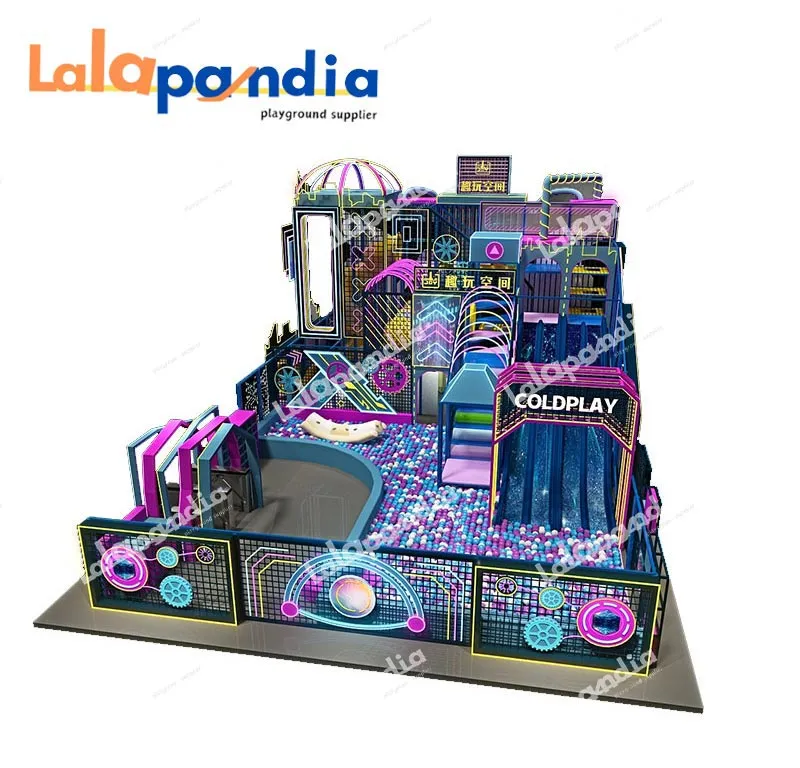
LALAPANDIA’s Urban Punk themed soft indoor playground uses materials selected for durability in commercial settings: high‑density foam, powder‑coated steel, and UV‑resistant components. You can explore their design portfolio and safety certifications on the Urban Punk themed soft indoor playground. However, even the best materials require consistent maintenance to deliver the expected service life.
Q: How often should I replace foam blocks in ball pits?
A: Inspect monthly. Replace when flattened >25% or vinyl tears. Expect 2–4 years in moderate traffic. For plastic balls, replace 10–20% annually and deep-clean quarterly.
Q: What are the most common failure points in themed soft play structures?
A: Netting attachments at corners, foam padding seams, and the transitions between climbing elements and platforms. These areas experience concentrated stress. Pay special attention to any point where a child‘s weight transfers from a moving element to a stationary surface.
Q: Can I use a pressure washer on indoor equipment?
A: For indoor equipment, never use a pressure washer. High‑pressure water forces moisture into foam cores, causing delamination and mold. Use a soft cloth, mild detergent, and a low‑flow rinse.
Q: How do I know if my indoor playground is EN1176 compliant?
A: EN1176‑1 specifies general safety requirements for permanently installed public playground equipment. A compliant structure will have documented test reports from the manufacturer. Annual inspections by a certified playground safety inspector are recommended to maintain compliance.
Q: What signs indicate that the floor surfacing needs replacement?
A: Visible compression, cracks, tears, or areas where the underlying concrete becomes exposed. Use a fall height rating test: if a critical fall zone loses its impact absorption, replace immediately.
When an operator invests in a distinct theme like Urban Punk, the indoor playground equipment must balance visual impact with long‑term reliability. LALAPANDIA manufactures themed soft indoor playgrounds that meet EN and ASTM safety standards, with customization available for scale, content, and learning objectives.
The Urban Punk themed soft indoor playground incorporates interactive climbing structures, immersive soft‑play zones, and sensory‑rich areas designed to keep children engaged. All equipment is designed, built, inspected, installed, and maintained by an experienced team dedicated to playground safety. LALAPANDIA offers turnkey solutions from concept to installation, providing operational manuals, safety‑certified components, weather‑resistant and durable materials, and comprehensive after‑sales support.
For operators managing high‑traffic themed environments, the combination of robust material selection and a structured maintenance schedule protects the investment and ensures that the Urban Punk playground remains as safe and exciting in its fifth year as it was on opening day.
Ready to keep your themed indoor playground profitable for years? Request a quote from LALAPANDIA for the Urban Punk Themed Soft Indoor Playground. Share your available square footage, target age range (recommended 3–12 years), and preferred theme intensity (full immersion or modular updates). Their design team will provide 2D layouts and 3D concept renderings with safety certifications included.
GET A QUOTE
 中文
中文 English
 Pусский
 Français
 Español