
Get In Touch
2026.11.16
Posted By: Peter
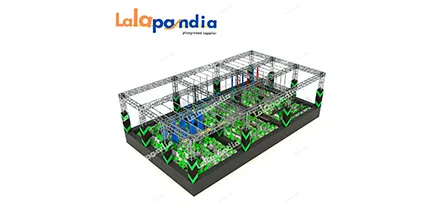
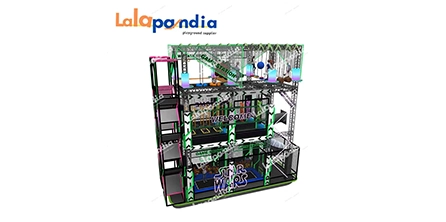
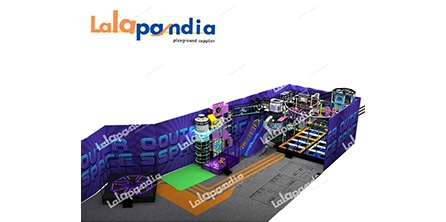
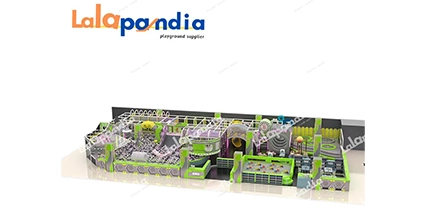
A Junior ninja course built from standard modules and a Junior ninja course designed around a theme are the same equipment category but different products. The theme changes the layout logic, the material finishes, the lighting, and the way children move through the space. You'll see why modular obstacles sit at the center of that design, what the materials and certifications look like, and where the custom production sits in the project timeline.
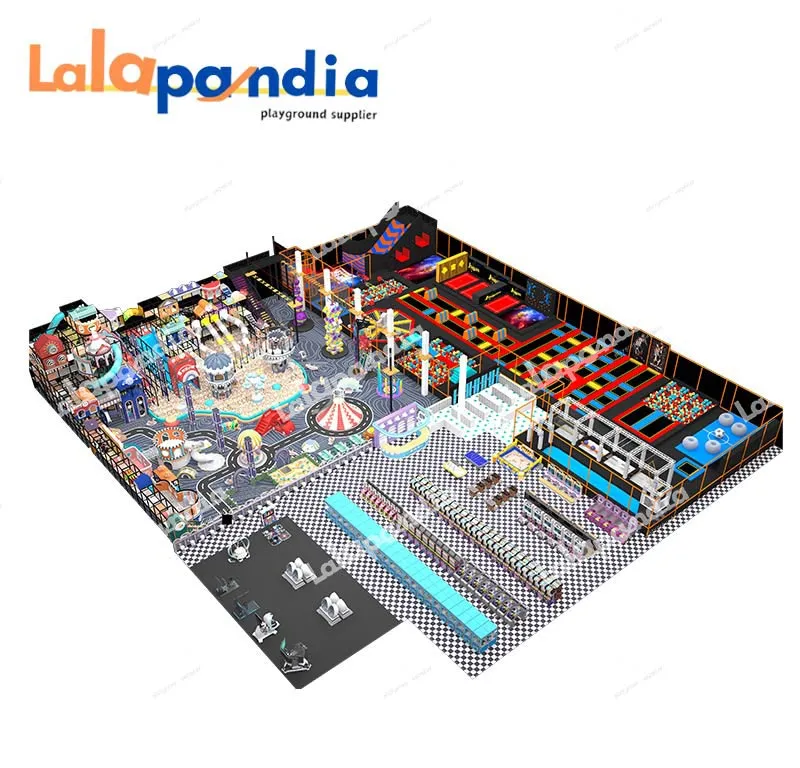
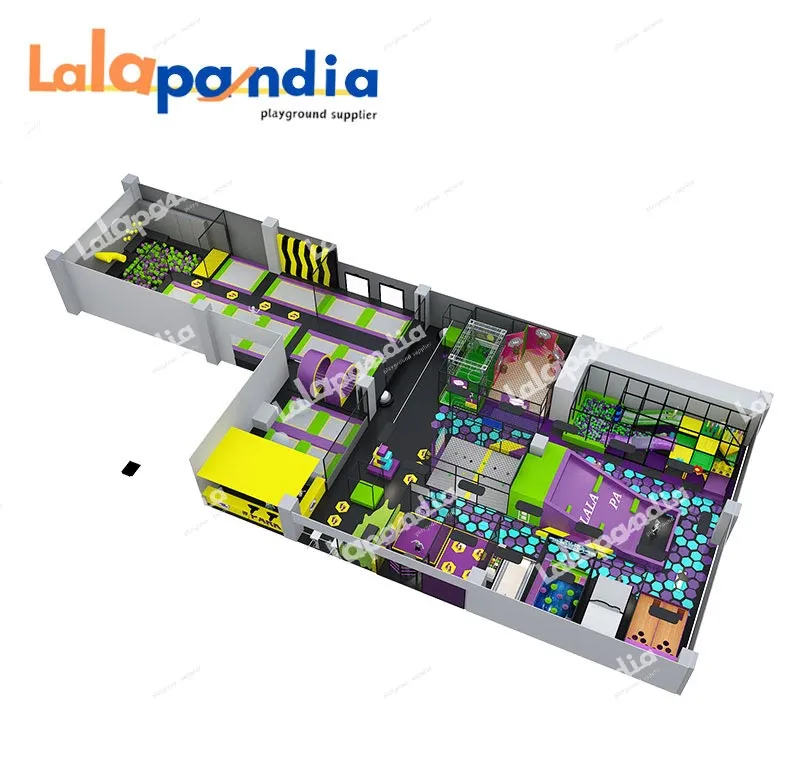
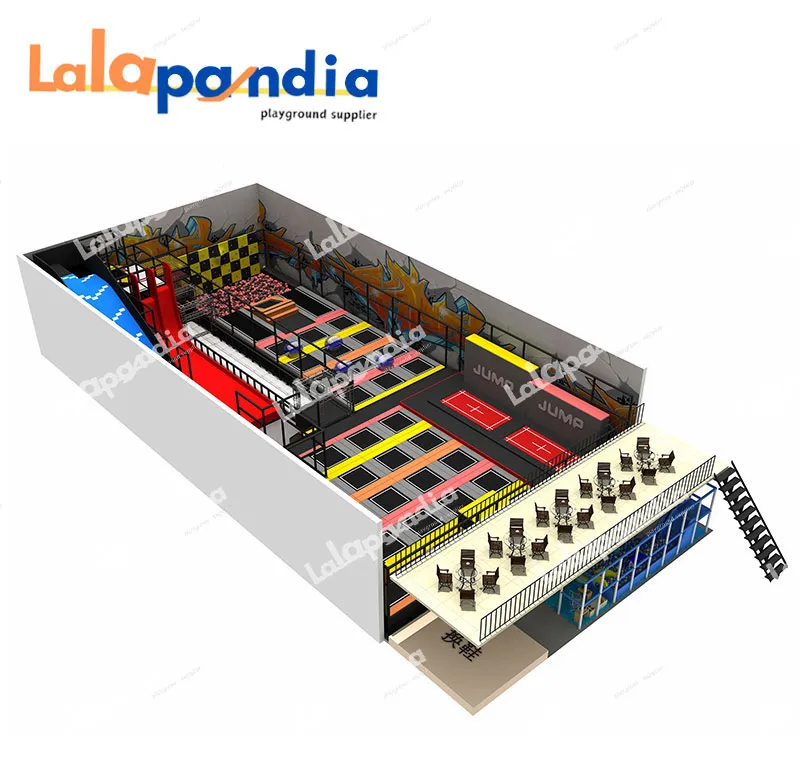
A theme changes the layout logic. On LALAPANDIA's European project, an 800m² warehouse was divided into distinct zones under a unified sporty IP theme—trampoline park, climbing wall, rope course, ninja course, VR area, and rest area. The ninja course itself featured rope swings and balance beams, and the ninja-style IP made it a hit for fitness and adventure seekers. The theme wasn't applied after the layout was set; it shaped how the zones were separated and how the obstacles were finished.
LALAPANDIA's indoor ninja obstacle course is designed for ages 5–12, with features including jungle gym playsets, rope climbs, monkey bars, balance beams, zip lines, and tunnel crawls. The custom obstacle course system covers ages 2–14, with recommended age 4–12 for the standard configuration. The themed design is scaled to that age band—the obstacle height, the difficulty progression, and the safety enclosure are all set to the younger user group.
A themed junior course starts with the site. LALAPANDIA's custom obstacle course system transforms spaces from 50–200m² into a technology-driven playground, with customizable modular components for family activity centers, ninja parks, trampoline parks, indoor playgrounds, malls, and schools. The layout flexibility is what allows the theme to drive the floor plan rather than the floor plan constraining the theme.
The modular approach matters because a junior course has to serve a range of ages and skill levels in the same session. Modular components allow difficulty adjustment—lower climbing walls for ages 4–12, or spinning platforms for older kids. That adjustability is built into the hardware, not into the theme. A fixed obstacle set would have to choose one difficulty level and stay there; a modular set can be reconfigured as the audience shifts.
| Element | Role in a themed junior course |
|---|---|
| Rope swings | Dynamic movement, ninja-style agility challenge |
| Balance beams | Precision and stability, low-height for younger users |
| Climbing walls / jungle gym | Upper-body and coordination development |
| Zip lines | Speed and thrill within a controlled path |
| Tunnel crawls | Body awareness, spatial navigation |
| Monkey bars | Grip strength and rhythm |
The custom obstacle course system uses modular components that allow difficulty adjustment. That adjustability matters for a junior course because the same venue may serve a 5-year-old and a 12-year-old in the same session. The theme doesn't fix the difficulty; the modular hardware lets the operator tune the challenge without changing the visual design.
The theme has to survive daily contact with children, so the material selection is part of the design. LALAPANDIA's structures use thickened aluminum trusses with 30cm×30cm base tubes and eco-certified non-toxic color powder coating, connected by high-strength corrosion-resistant metal alloy buckles and tensile fatigue-resistant steel wire springs.
The soft elements follow the same logic. Sponge blocks and ocean balls are high-density EPE with fire resistance meeting ASTM standards. Jumping mats are PP with a spring cover to prevent contact injuries, and the PVC leather is 1000D high-density at 0.45mm thickness—water- and oil-proof and easy to clean. Knitted netting provides support and impact resistance for platform and obstacle surfaces, secured with durable cable ties.
Frame: 30×30cm aluminum base tube, eco-certified powder coat
Connectors: corrosion-resistant metal alloy buckles, fatigue-resistant springs
Padding: high-density EPE sponge, ASTM fire resistance
Soft surfaces: 1000D PVC leather, 0.45mm, water- and oil-proof
Netting: knitted fabric for support and impact resistance
Mats: PP with spring cover
A themed finish that fades or peels after a few months undermines the immersive effect. The powder coating on the aluminum frame and the 1000D PVC on the soft surfaces are the layers that carry the visual theme day to day. The material specification and the theme specification are chosen together, not sequentially.
The themed environment extends beyond the physical obstacles. LALAPANDIA's custom obstacle course includes smart scoring modes using RFID wristbands or motion sensors for climbing races, ball-pit treasure hunts, and maze puzzles, with difficulty adjustable for solo or team play. The system also supports interactive projector games and AR-enhanced mazes as modular add-ons.
The European project went further, merging VR pods with physical play under a unified sporty IP theme—the VR exteriors were wrapped in sporty IP-designed exteriors for immersive digital experiences. For a junior ninja course, that combination of physical obstacles and digital feedback is what makes the environment feel like a world rather than a set of equipment.
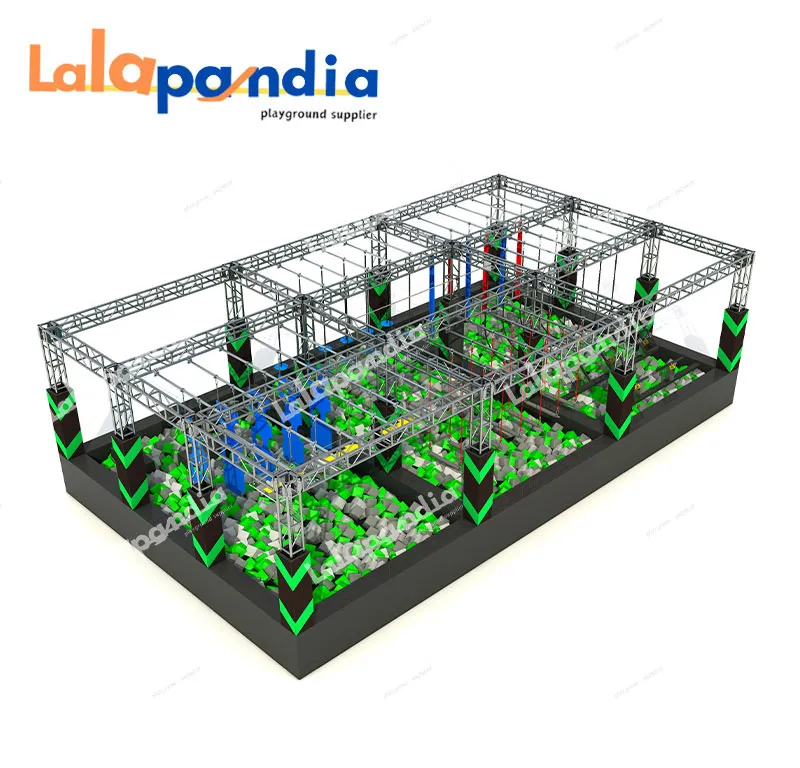
A physical obstacle course tests the body; an interactive layer tests timing and decision-making. The RFID or motion-sensor scoring gives children immediate feedback on their run, and the adjustable difficulty lets the operator run the same course as a casual session or a timed challenge. For a family entertainment center, that dual use extends the course's appeal beyond a single age or skill level.
The themed design has to meet the same safety standards as a standard course. LALAPANDIA's structures comply with ASTM F1918, ASTM F2970-22, EN1176-1:2017+A1:2023, EN 71, ASTM F1487-21, EN1176-3:2017, EN1176-10:2023, and EN ISO 23659:2022. The custom obstacle course system carries ASTM F1918 and EN1176, with SGS and TÜV certification.
The production path runs from design through manufacturing to installation. LALAPANDIA's European project followed a 6-week design phase, a 10-week production phase, and a 4-week installation and debugging phase, totaling 20 weeks excluding shipping. The factory-direct model means the custom theme is manufactured in-house rather than sourced from a third-party fabricator.
| Phase | Duration (European project reference) | What happens |
|---|---|---|
| Design | 6 weeks | Layout, equipment specs, IP branding finalized with client |
| Production | 10 weeks | Custom manufacturing, including bespoke content |
| Installation & debugging | 4 weeks | On-site installation and system tuning |
| Total (excl. shipping) | 20 weeks |
A themed course has more variables than a standard one—the IP elements, the color scheme, the zone layout, and the interactive layer all have to be resolved before the frame is cut. LALAPANDIA's collaboration process starts with understanding the preferred theme, color scheme, core experience, target age group, and budget range, then moves to concept design and production. Rushing that phase shifts the cost to the production stage, where changes are more expensive.
LALAPANDIA designs and manufactures custom themed play areas for commercial venues, with a product range that includes indoor playgrounds, trampolines, ninja courses, and climbing structures. For a Junior ninja course project, the company's value sits in the combination of custom IP design, modular obstacle production, and the material and certification package that supports a commercial installation. The European hybrid FEC project—an 800m² warehouse with a themed ninja course as one zone among several—shows how the themed approach works at the venue level, not just at the equipment level. For a family entertainment center, ninja park, trampoline park, or indoor playground adding a junior course, that factory-direct custom model connects the theme to the production drawing.
Confirm the available floor area against the 50–200m² customizable range, the target age band against the obstacle height and difficulty settings, and the theme direction against the IP and color customization available. The page's project timeline—design, production, installation—gives the schedule; the site and the brand determine the design brief.
Send over your floor plan, target age group, and theme direction—we'll help you check them against the modular obstacle layout, the material and certification requirements, and the custom production timeline. Talk to LALAPANDIA about your Junior ninja course requirements and get a design-level answer before you commit to the project.
GET A QUOTE
 中文
 English
 Pусский
 Français
 Español