
Get In Touch
2026.04.29
Posted By: Peter
Every parent or playground operator has faced the same question: should you invest in a magical castle-themed playland or a more flexible open play structure? The answer isn’t always obvious. Themed playgrounds promise immersive storytelling, while open designs offer freedom and adaptability. But which one truly delivers better engagement, safety, and return on investment?Let’s break down the real-world differences so you can make a confident decision — without marketing fluff.
Before comparing, let’s clarify the terms. Themed playgrounds are built around a specific narrative or visual concept — a pirate ship, jungle treehouse, space station, or fairy-tale village. Every element, from slides to climbing walls, reinforces that story. Open play structures, in contrast, focus on function over form. They use modular components like nets, ramps, tunnels, and ball pits arranged in a non-narrative layout. Children decide how to use the space, creating their own games.
Both have legitimate places in indoor play environments. But your choice will shape everything from maintenance costs to how long children stay engaged.
Safety is non-negotiable. According to ASTM F1487 (standard for public playground equipment), both types must meet impact attenuation, entrapment, and protrusion requirements. However, real-world risks vary.
Themed playgrounds often include intricate details — false doors, decorative portholes, or removable props. These create potential pinch points or small parts that can break off. A 2021 industry report noted that themed equipment requires 30% more frequent visual inspections because of these decorative elements. Open structures, with their simpler geometry, have fewer hidden hazards. Their transparent layouts also make it easier for supervisors to spot a child in trouble from across the room.
But there’s a trade-off: open structures can feel less “containing” for toddlers. Themed environments naturally guide children through a linear path (enter the castle, climb the tower, slide down), which reduces aimless running and collisions. Open designs require more zone marking or soft barriers.
Professional tip from facility managers: If your staff-to-child ratio is low (e.g., one adult per 15 children), a themed layout provides passive supervision support. For higher ratios, open structures encourage more creative risk-assessment.
Let’s talk money — because playgrounds are long-term investments.
| Factor | Themed Playgrounds | Open Play Structures |
|---|---|---|
| Initial equipment cost | Higher (custom molds, detailed fabrication) | Lower (standardized modular components) |
| Installation time | 4–8 weeks typical | 2–3 weeks typical |
| Annual maintenance | 10–15% of equipment cost | 5–8% of equipment cost |
| Replacement part lead time | 6–12 weeks (custom parts) | 1–2 weeks (standard parts) |
| Lifespan | 8–12 years (fading/theme obsolescence) | 15–20 years (timeless design) |
Themed playgrounds can become dated quickly. A “popular cartoon castle” from five years ago may look tired to today’s kids. Open structures avoid this problem entirely — they don’t rely on pop culture relevance. However, themed spaces often command higher admission prices because parents perceive them as premium experiences. Some indoor play operators report 20–25% higher ticket revenue for themed zones, at least for the first three years.
If you’re on a tight budget or plan to relocate equipment, open structures are more practical. But if you own a destination venue (like a mall-based family center), the immersive pull of a themed playground can justify the extra expense.
Both designs support physical activity, but their impact on cognitive and social skills differs significantly.
Themed playgrounds excel at:
Narrative thinking and pretend play (e.g., “I’m the captain steering the ship”)
Cooperative role-play (children assign roles like pirate, cook, lookout)
Following visual cues (arrows, signs, color-coded paths)
Open play structures shine at:
Divergent problem-solving (how many ways can I climb from A to B?)
Negotiation skills (children constantly agree on game rules)
Spatial awareness (no fixed path means constant orientation checks)
According to child development research from the University of Minnesota’s Play Equity Lab (2022), open-ended environments produce 42% more spontaneous collaboration behaviors compared to themed settings. However, themed environments are better for children with autism or sensory sensitivities — predictable storylines reduce anxiety.
So which is “better”? It depends on your goals. For cognitive flexibility and creativity, open structures win. For emotional engagement and immersive play, themed designs lead.
Square footage is expensive. How you use it matters.
Themed playgrounds typically require 30–40% more floor space to achieve the same activity density as open structures. Why? Themed layouts need “breathing room” around decorative elements so children can appreciate the visual story. Open structures can pack more play value into tighter footprints using vertical climbing and overlapping pathways.
However, open structures can feel chaotic if not zoned properly. A skilled designer will use carpet colors, low walls, or subtle level changes to create distinct activity areas without full themes.
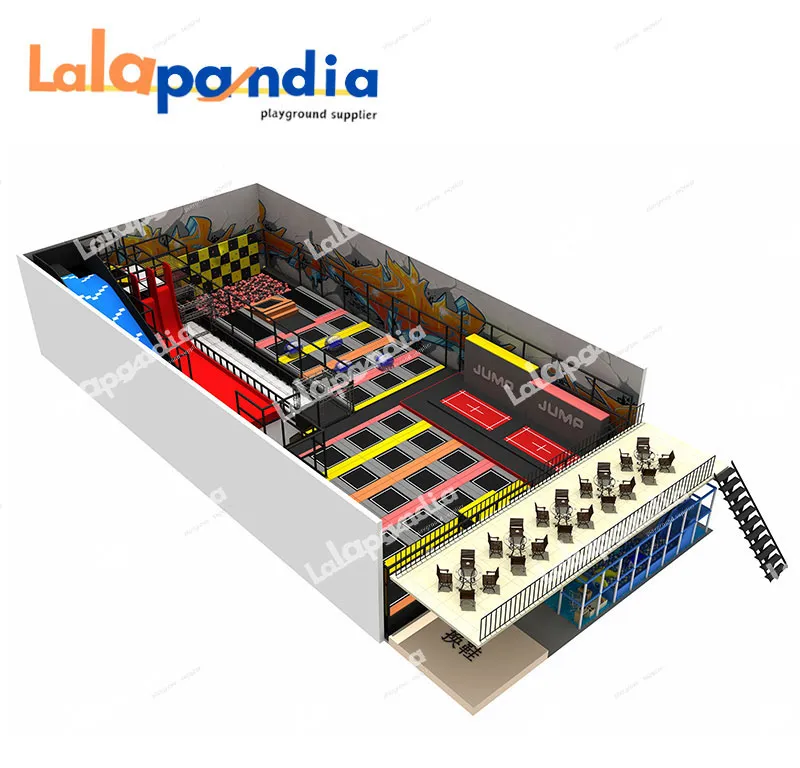
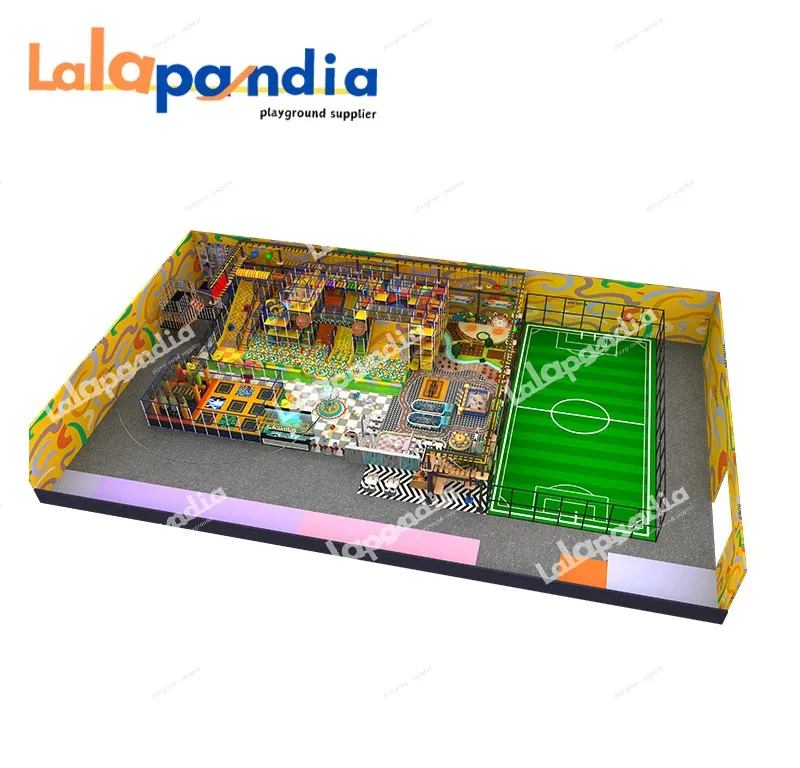
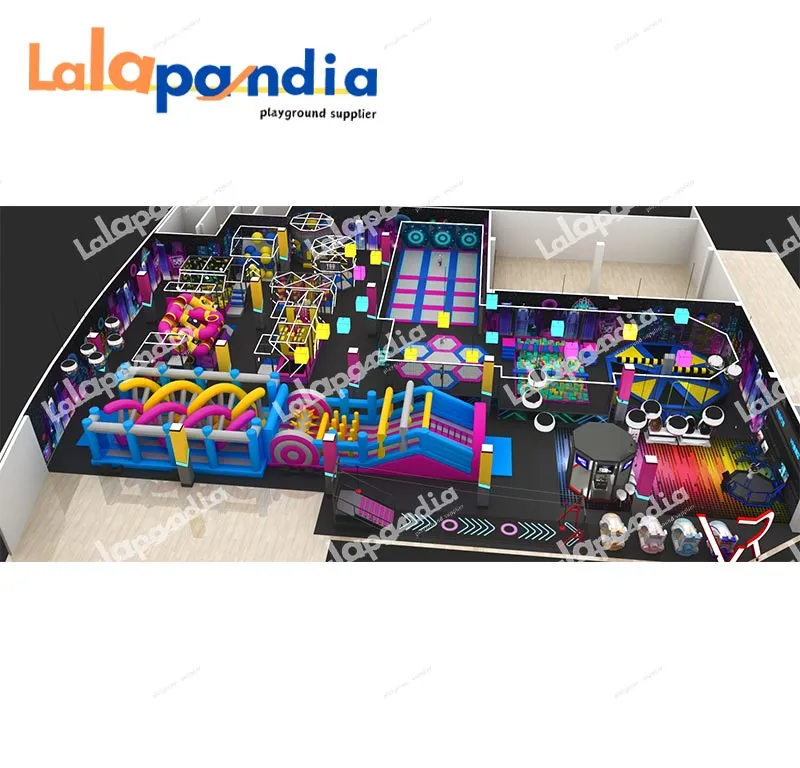
One practical compromise: zone-based theming. You designate certain areas as themed pods (a small pirate cove, a space shuttle cockpit) connected by open transition zones. This gives you the best of both worlds: immersive hotspots plus flexible free-play areas.
For a real-world example, many successful family entertainment centers adopt this hybrid model. They might have a themed toddler area (low risk of damage to delicate props) and an open primary zone for older kids.
Still unsure? Answer these questions honestly.
What’s your primary audience age?
Under 5: Themed (predictable paths reduce overstimulation)
5–12: Open (encourages group creativity)
Mixed ages: Hybrid
How often will you refresh the space?
Every 2–3 years: Themed (you can update storylines)
Every 5+ years: Open (design stays relevant)
What’s your budget per square foot?
Under $150/sq ft: Open structures
$150–300/sq ft: Consider hybrid
Over $300/sq ft: High-end themed possible
Do you have on-site maintenance staff?
Yes, full-time: Themed is manageable
Contractors only: Open structures are safer
What’s your competitive landscape?
Nearby competitors all have open designs → Theme differentiates you
Competitors have strong themes → Open offers an alternative niche
Even experienced operators make these errors:
Over-theming small spaces – A 500 sq ft room crammed with props becomes a claustrophobic hazard, not a wonderland.
Ignoring sightlines in open designs – Without subtle zoning, open structures turn into a running track. Use soft seating or low arches to break sightlines.
Forgetting about lighting – Themed playgrounds need dynamic lighting to sell the story; open structures need even, shadow-free illumination for safety.
Skipping a pilot test – Always observe real children on mockups. A “clever” themed element might be ignored or become a trap.
According to a 2023 survey by the International Association of Amusement Parks (IAAPA), 63% of indoor play facility operators who chose themed designs without testing later modified or removed decorative elements within the first 18 months. That’s an expensive lesson.
At this point, you might realize that neither pure themed nor pure open is ideal for your situation. Many successful indoor playgrounds use custom hybrid designs — but those require experienced engineering to ensure safety compliance and durability.
If you’re planning a new build or major renovation, consider working with a manufacturer that offers both themed and open configurations under one roof. They can help you model traffic flow, cost projections, and even 3D simulations before you cut a single foam pad.
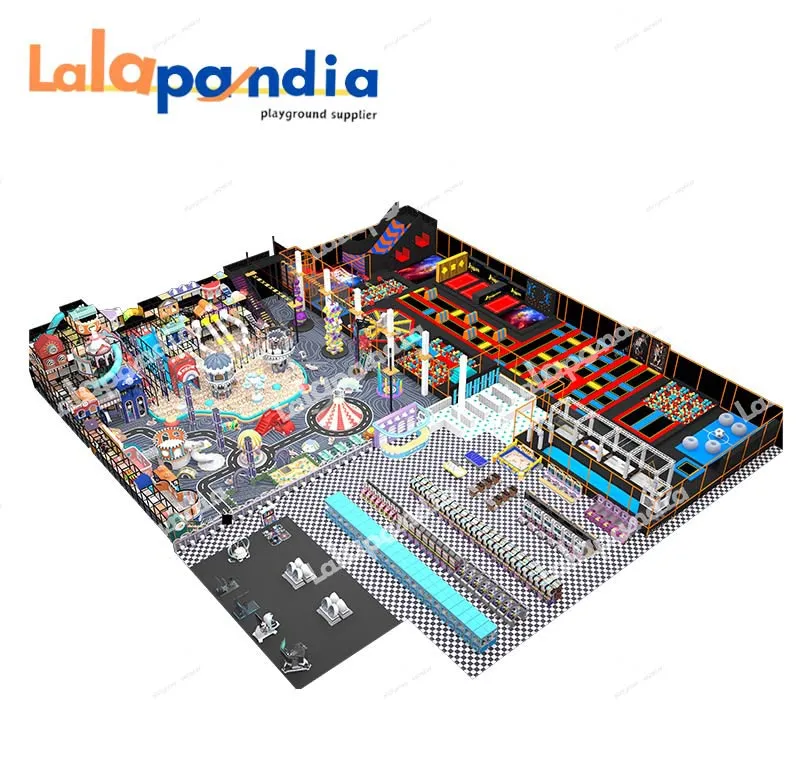
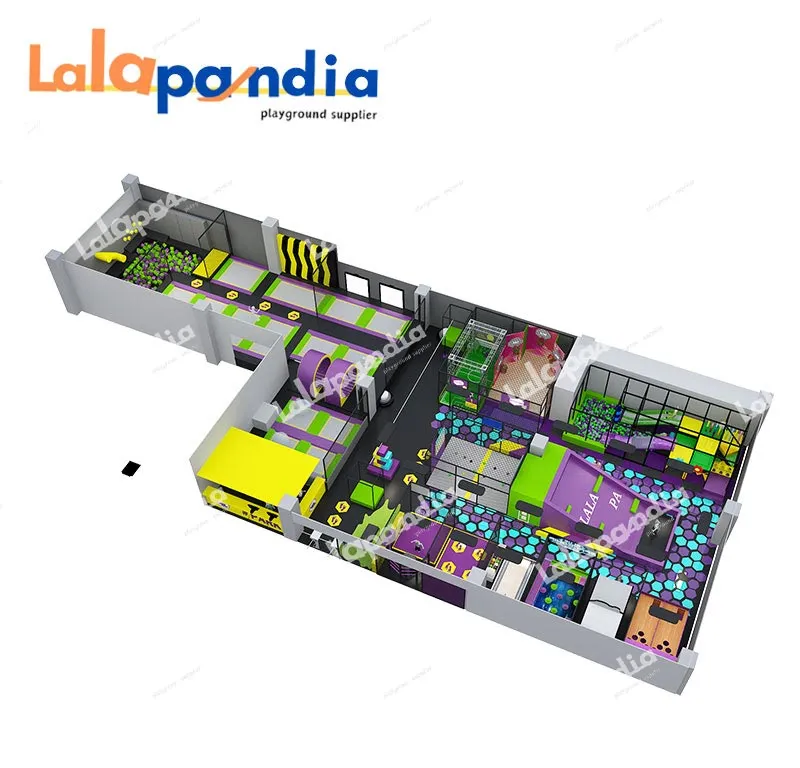
One brand that has quietly built a reputation for flexible, safety-first designs is Lalapandia. Their comprehensive indoor family play and sport center solutions are used by operators who need to serve diverse age groups while keeping maintenance predictable.
Here’s the honest take: There’s no universal winner. Themed playgrounds outperform when you have premium real estate, a younger target audience (toddlers to early elementary), and the budget for regular updates. Open play structures win for multi-age facilities, tight budgets, and locations where flexibility matters more than Instagram moments.
But the smartest operators aren’t choosing. They’re combining. A themed “anchor” zone plus open modular attachments gives you the revenue boost of immersion with the low-risk durability of open designs.
Before you finalize any equipment order, ask your shortlisted vendors for three references who switched from one style to the other. Their real stories — what they’d keep and what they’d change — are worth more than any brochure.
Now it’s your turn. What’s the biggest challenge in your current play area? Too much chaos? Boredom after 20 minutes? High injury rates? The right structural choice solves 80% of those issues. Start with a simple layout sketch, then build from there.
GET A QUOTE
 中文
中文 English
 Pусский
 Français
 Español