
Get In Touch
2026.04.27
Posted By: Peter
Parents drop off their kids for a birthday party. The facility looks impressive—rows of trampolines, foam pits, and towering climbing walls. But beneath the bright lights and energetic music, a nagging question lingers: Is this realmente safe? It‘s a valid concern. Recent data from the U.S. Consumer Product Safety Commission shows that trampoline parks account for approximately 7,000 to 15,000 emergency room visits each year in the United States alone. Nearly 34% of all trampoline injuries now happen at commercial facilities rather than backyards, with over half resulting in fractures or dislocations. Knowing how to solve these safety concerns isn‘t just about preventing lawsuits—it’s about protecting the kids, building lasting trust with families, and ensuring your business survives beyond the first busy season.
Let‘s be honest—the dynamics at a commercial jump facility are fundamentally different from a single backyard trampoline. You’re managing multiple jumpers across interconnected surfaces, often with varying skill levels and age groups sharing the same space. According to Yale Medicine pediatric orthopaedic surgeon Dr. Dominick Tuason, approximately 75% of trampoline injuries occur when two or more children jump simultaneously. That single statistic underscores the biggest operational challenge: crowd management and collision prevention.
The weekend surge makes matters worse. A 2025 report found that over 55% of all facility-related injuries happen between Friday evening and Sunday night, directly correlating with peak attendance periods and often inadequate staffing levels.
But here’s what many operators overlook: raw injury numbers don‘t tell the full story. When you dig deeper into the data, you’ll find that controlled environments—with proper safety protocols—can actually reduce certain risks compared to backyard setups. One study covering 18 Australian trampoline parks found an adjusted injury rate of 1.14 injuries per 1,000 jumper hours, which translates to roughly one incident every 877 hours of jumping. That‘s remarkably low when you consider the volume of activity.
After reviewing injury reports from multiple facilities, three patterns consistently emerge. First is collision-related accidents, which account for about 38% of all incidents. Jumpers bumping into each other mid-air, landing on occupied trampoline beds, or losing spatial awareness in crowded zones are all preventable with proper zoning and capacity limits.
Second is inappropriate landing techniques. Sprains and fractures make up roughly 40% of all injuries, typically occurring when a jumper lands awkwardly on an outstretched arm or twisted ankle. This isn‘t a equipment failure—it’s a behavioral one. Many young jumpers attempt flips or advanced maneuvers without proper training or supervision
Third is fall-related incidents. Falls from trampoline surfaces onto hard edges or between mats cause some of the most severe injuries. Here’s what the numbers actually show: commercial facilities that use proper enclosure systems have reduced fall injuries by approximately 82%, thanks largely to perimeter netting and padded frame coverage. That‘s a massive risk reduction.
If you’re operating a trampoline facility without referencing ASTM F2970, you‘re navigating blind. This standard practice covers everything from design and manufacture to installation, operation, maintenance, and inspection of trampoline courts. It’s the industry‘s most comprehensive safety framework for North American facilities, while European operators should also consider EN ISO 23659 for regional compliance.
What does ASTM F2970 actually require in practice? Let me break down the essentials:
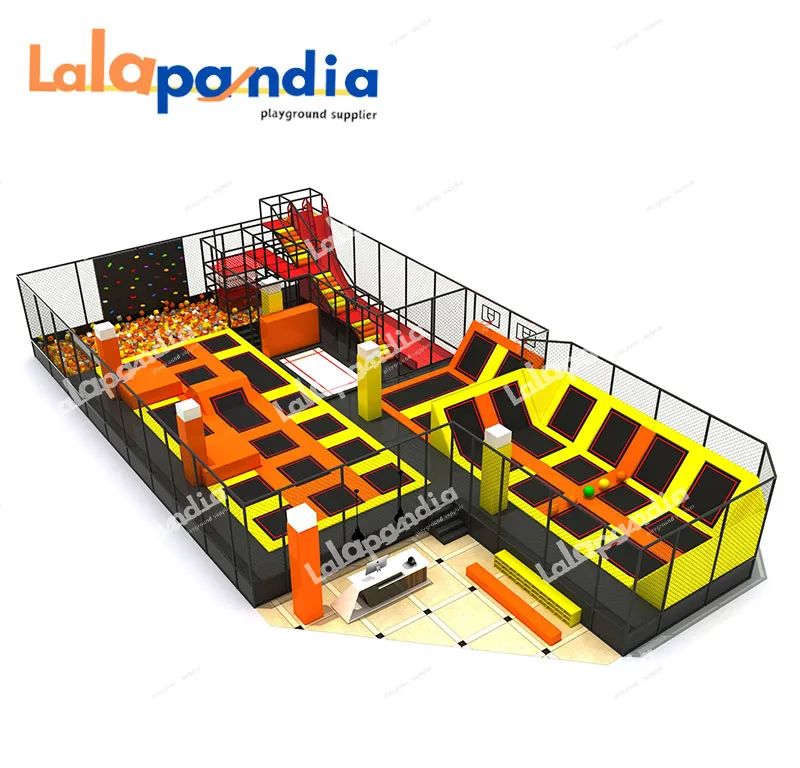
Zoning by age and skill level. Mixing toddlers with teen jumpers in the same area is a recipe for disaster. Properly designed facilities separate play zones—toddler areas with lower bounce heights, family zones for casual jumping, and advanced sections for older kids and adults.
Padding that actually works. Not all foam padding performs equally. High-density impact-absorbing padding should cover every spring, frame edge, and hard surface. Thicker foam dissipates more energy from falls, and regular inspection ensures no exposed metal or degraded material creates hidden hazards.
Supervision that scales with demand. Weekend crowds require more floor monitors, period. One rule I‘ve seen work well is requiring at least one trained spotter per 25 jumpers during peak hours. These staff members aren’t just watching—they‘re actively enforcing rules, redirecting unsafe behavior, and responding to incidents within seconds.
Daily maintenance checklists. A visual inspection of all trampoline surfaces, safety padding placement, netting integrity, and structural components should happen before opening every single day. Industry data suggests that daily maintenance routines reduce accident risks by up to 35% and extend equipment lifespan by 2–3 years.
This is where safety technology has made its biggest leap forward. Traditional foam pits have been a staple for years, but they come with well-documented problems. Uneven foam distribution, degraded blocks, and hidden gaps between blocks create unpredictable landing surfaces. Jumpers can sink too deep, twist ankles on compacted foam, or hit the bottom unexpectedly.
Airbag landing zones solve these problems entirely. Facilities equipped with advanced airbag systems report significantly lower serious injury rates compared to those using traditional foam pits or standard mats. The airbag creates a consistently forgiving surface that absorbs impact uniformly across its entire area. No hidden gaps, no degraded blocks, no surprises.
The difference becomes obvious the first time you watch someone crash-land awkwardly on an airbag versus a foam pit. One deflects and absorbs. The other compresses unevenly and transfers force unpredictably. For trampoline facilities serious about reducing liability, the airbag is no longer a luxury—it‘s becoming the expected standard.
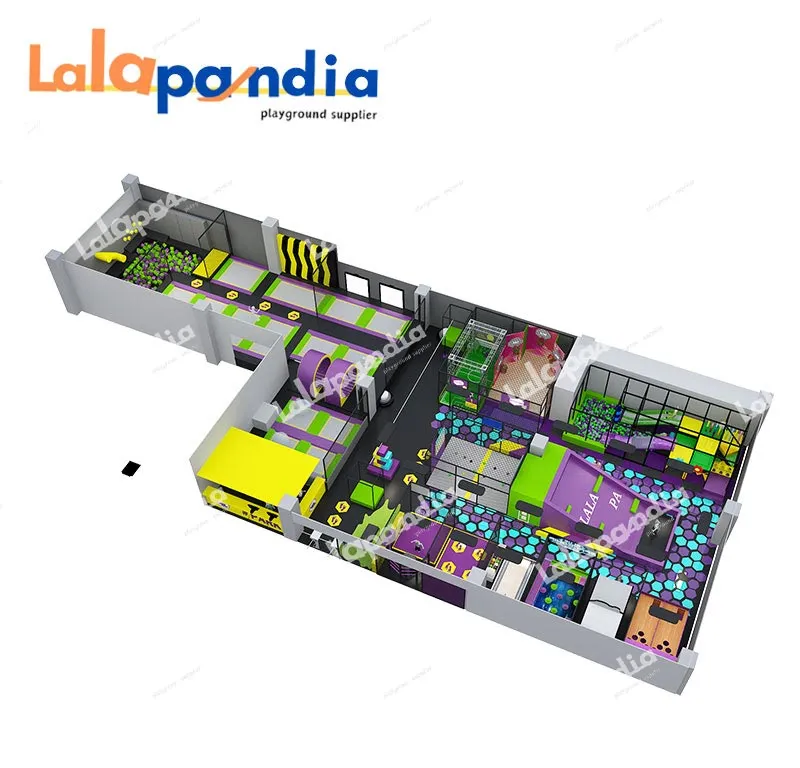
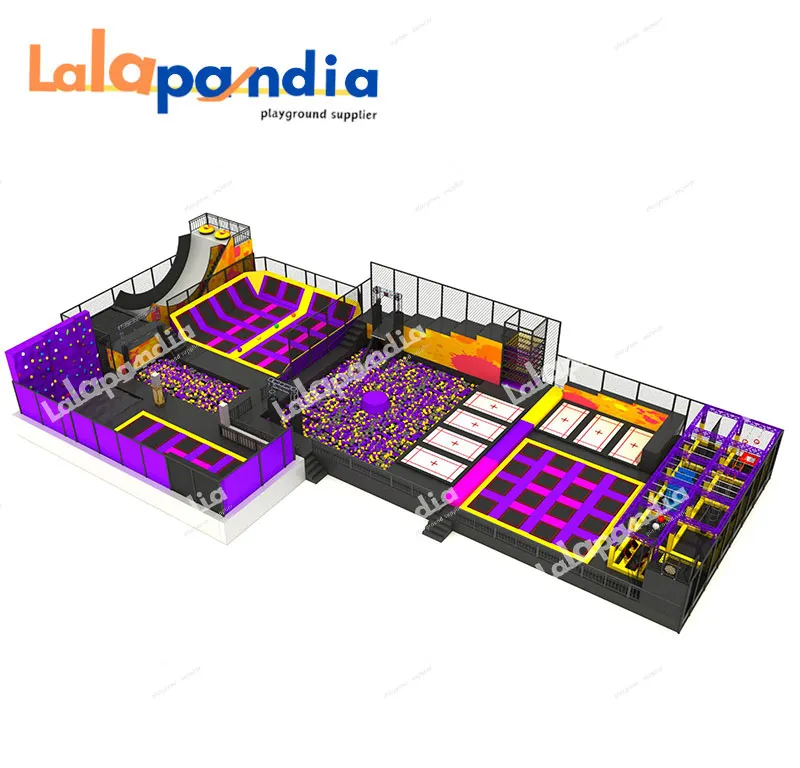
I recently reviewed a European project where LALAPANDIA worked with a client to build a multi-zone indoor activity center. The space included a dedicated trampoline area with beginner and advanced zones separated by design, sports-grade netting systems, and dynamic IP-themed decor that made safety feel like part of the adventure rather than an afterthought.
What made this project different wasn’t just the equipment quality—it was the customization approach. The layout was designed specifically for the site‘s unique dimensions and ceiling height. Safety nets were tensioned to match the jumping angles. Pad thickness was selected based on expected user weight ranges and traffic volume. Even the color scheme served a safety purpose, with contrasting zones helping jumpers maintain spatial awareness.
That’s the difference between buying generic “trampoline park” equipment and investing in a site-tailored safety solution. Off-the-shelf products might look fine in a catalog, but they don‘t account for your actual floor plan, expected demographics, or local regulatory requirements.
Let me say something that might surprise you: the most expensive equipment in the world won’t prevent injuries if your staff isn‘t trained to use it properly. I’ve walked into facilities with million-dollar setups where floor monitors were scrolling through phones instead of watching jumpers. I‘ve also seen modest parks with exceptional safety records because their teams treated every rule violation seriously.
Proper training covers three areas:
Rule enforcement without aggression. Your staff needs to stop unsafe behavior—flips in general admission zones, double bouncing, running between trampolines—without creating confrontation. This is a skill that requires practice and role-playing.
Emergency response protocols. Every floor staff member should know exactly where the first aid kit is, who calls 911, how to clear the floor during an evacuation, and what information to give emergency responders. Conduct drills monthly, not annually.
Equipment inspection routines. Your maintenance team needs to know what to look for: loose springs, mat tears, frayed netting, compressed padding. These issues rarely appear dramatically. They creep in gradually, and only trained eyes catch them early.
One operator I spoke with reduced their incident rate by over 40% in six months simply by implementing a mandatory 15-minute pre-shift safety briefing for all floor staff. That’s it. No new equipment, no expensive consultants. Just consistent communication and accountability.
The conversation around trampoline facility safety has matured significantly over the past decade. We‘ve moved from reactive fear—are these places death traps?—to proactive engineering. The data shows that with proper equipment, zoning, supervision, and maintenance, commercial facilities can be remarkably safe. The injury rate per jumper hour is low when compared to other youth activities like skateboarding, gymnastics, or even organized team sports.
But low doesn’t mean zero. Complacency is the real enemy. Every busy weekend brings new jumpers who‘ve never been to your facility before. Every birthday party includes at least one child who thinks rules don’t apply to them. Every piece of padding degrades slightly with use.
The solution isn‘t complicated, but it requires discipline. Start with certified equipment that meets ASTM F2970 or EN standards. Implement rigorous daily inspections. Train your staff like their jobs depend on catching problems—because they do. Zone your facility by age and skill level. And never, ever assume today will be the same as yesterday.
GET A QUOTE
 中文
中文 English
 Pусский
 Français
 Español