
Get In Touch
2026.05.05
Posted By: Peter
For a family entertainment center owner or a campground manager, the decision often starts with a simple question: “What will draw more people in?” But when the options are a towering vertical challenge or a multi-level horizontal obstacle course, the answer isn’t always clear-cut.
Both attractions build confidence and physical strength, yet they serve different crowds and business goals. One offers a steady, repetitive challenge; the other delivers variety and social interaction. Understanding these differences will save you from costly renovations later.
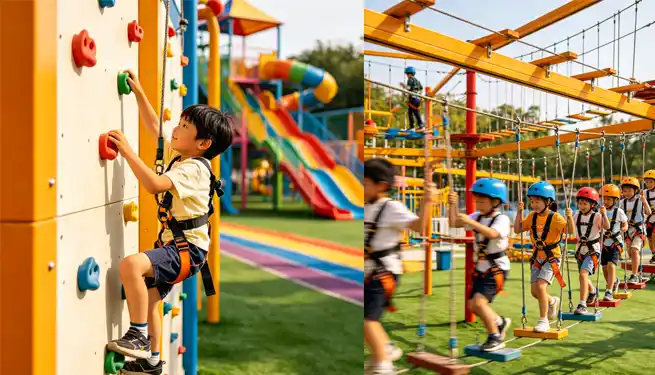
A climbing wall is essentially a vertical puzzle. The user relies on grip strength, toeholds, and route-finding to move upward. Each ascent lasts a few minutes, and the satisfaction comes from reaching the top. This structure naturally attracts competitive individuals who enjoy tracking their own progress.
A high ropes course, on the other hand, is a horizontal journey. Suspended platforms, swinging logs, and cable walks stretch across a course that might take 20–40 minutes to complete. It’s less about pure strength and more about balance, problem-solving, and overcoming a fear of heights in a continuous flow.
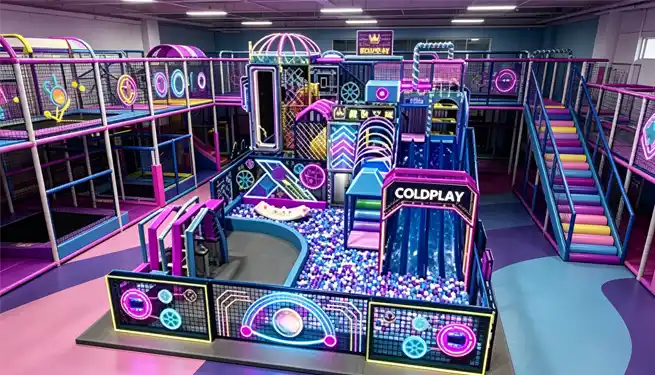
This is where many operators make a miscalculation. A climbing wall can fit into a relatively small footprint—perhaps 15x15 feet—but its throughput is limited. If you have a four-lane auto-belay wall, you might serve 40–60 people per hour, assuming each climb takes 2-3 minutes.
A ropes course demands more square footage (often 1,500–3,000 sq ft) but serves more people simultaneously. A typical course can handle 15–30 participants at once, each moving at their own pace. Over an hour, that could mean 100–150 users.
Throughput comparison table
| Feature | Climbing Wall | High Ropes Course |
|---|---|---|
| Space needed | 200–500 sq ft | 1,500–3,000+ sq ft |
| Users per hour | 40–60 (4 lanes) | 100–150 |
| Average time per user | 2–5 min | 20–40 min |
| Staff required | 1–2 belayers | 2–4 facilitators |
Data based on industry averages from ASTM F2950 standards for adventure attractions.
Climbing walls have a lower entry age (typically 5+ years) but a higher physical barrier. A child who lacks arm strength will struggle quickly. Conversely, a ropes course, especially those designed with a continuous belay system, allows younger or less athletic users to participate because the legs and core do most of the work.
According to industry practice at major FECs, ropes courses see higher repeat usage from families because different “routes” (easy, medium, hard) let each family member choose their own challenge. A climbing wall, while iconic, can be intimidating for beginners who dislike the exposed feeling of a vertical fall.
Modern climbing walls often rely on auto-belays, which are active systems requiring the user to clip in each time. These are reliable but have a higher chance of user error if someone forgets to attach properly.
Professional-grade ropes courses use a continuous belay system—a smart cable that never requires clipping and unclipping. Participants remain attached from start to finish. This passive approach dramatically reduces human error. Many safety managers for adventure playground equipment now prefer continuous belay for public venues because staff can monitor the flow rather than each individual connection.
If your team has limited experience with safety inspections, you might want to review continuous belay system specification and how they lower operational risks.
Indoor venues favor climbing walls—they take less headroom and are simple to maintain. Outdoor parks often prefer ropes courses because the structure handles wind and rain better than a bare vertical wall (which becomes slippery when wet).
However, ropes courses require daily checks of tensioned cables, wooden elements, and platform connections. Climbing walls need regular inspection of holds (which loosen over time) and auto-belay servicing. Neither is “set and forget,” but a well-designed course from a reputable supplier can last 15–20 years with proper care.
Ask yourself three questions:
What is your primary audience?
Families with mixed ages → Ropes course
Teenagers and young adults → Climbing wall (or both)
What is your available height and floor space?
Less than 2,000 sq ft and high ceilings → Climbing wall
Over 2,500 sq ft with 12–15 ft height → Ropes course
What is your staffing budget?
Minimal staff (2 people per shift) → Climbing wall
Staff available for active facilitation (4+ people) → Ropes course
There is no universal “best” choice. For a trampoline park adding an attraction, a climbing wall offers quick installation and low staffing. For a summer camp or resort looking for a half-day activity, a ropes course generates longer dwell time and better perceived value.
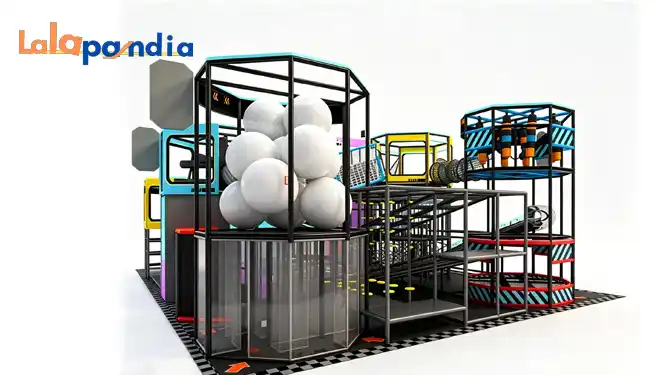
If your budget and space allow, consider a combined structure. Some adventure playground equipment now integrates a small climbing wall into the entrance of a ropes course, or places bouldering elements beneath the platforms. This gives users a taste of both experiences while sharing a single safety system and footprint.
For venues aiming to maximize return on investment, hybrid designs often outperform single-attraction purchases. You can explore modular hybrid configurations that integrate climbing challenges within a continuous course layout.
Start with your visitor profile, not your personal preference. A climbing wall looks dramatic in photos, but it serves a narrower audience. A ropes course requires more capital upfront but typically delivers higher per-visitor spending through longer sessions and group bookings.
Before signing any purchase order, request third-party inspection reports for the structural components. Look for compliance with EN 15567 (European standard for ropes courses) or ASTM F3101. Ask the supplier how their continuous belay system handles salt air or humidity if you’re located near a coast.
If you are still weighing the two options, a professional consultation can clarify hidden costs like platform decking replacement or auto-belay reset intervals. Get detailed technical specifications for both systems from a single source to compare side by side.
GET A QUOTE
 中文
中文 English
 Pусский
 Français
 Español