
Get In Touch
2026.05.09
Posted By: Peter
A European shopping mall had a problem. The ground floor foot traffic had been flat for two consecutive quarters. Anchor stores pulled footfall, but shoppers went directly to their destinations and left. There was no reason to linger, no impulse to browse, no family‑focused destination that turned a quick errand into an afternoon outing.
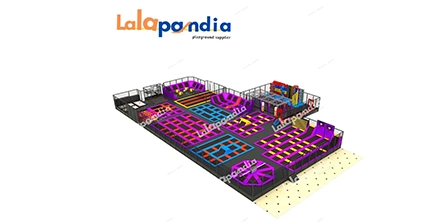
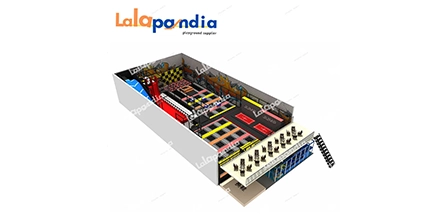
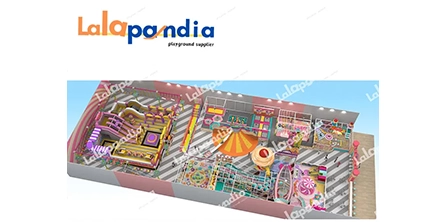
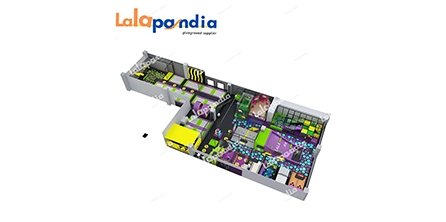
The mall operator converted 450 square meters of underutilized retail space into a Fun kids indoor amusement center supplied by LALAPANDIA. The result: first‑month visitor count increased by 40 %. The play center did not just attract children; it brought parents who stayed, grandparents who watched, and siblings who played. The equipment package was a mix of trampolines, a ball pool, a slide, climbing walls, rope nets, a carousel, and soft play elements – all certified to ASTM and EN safety standards, all built with high‑density EPE foam and 0.45 mm thick PVC leather, and all designed to fit the exact footprint of the mall‘s available shell space.
This article explains why the indoor amusement centers equipment mix matters as much as the location, how the certification stack (ASTM F1918, EN 1176, SGS‑tested) protects both children and the operator‘s liability insurance, and what the “customization” promise actually means when your site has columns, low ceilings, or an irregular shape. (引言约247字符)
The 450 ㎡ mall installation included seven distinct attraction types:
Trampoline zone with rust‑proof frames and robust springs, combined with projection interactive games – a feature LALAPANDIA pioneered by integrating digital play into trampoline parks.
Ball pool filled with high‑density EPE foam balls, flame‑retardant to ASTM standards and tested for chemical safety (EN71, ROHS).
Soft play elements for younger children, built with reinforced plastics and metal components.
Slides designed for both indoor and outdoor conditions, using fade‑resistant materials.
Climbing walls and rope nets with steel structures and corrosion‑resistant coatings.
Carousel – a slower, more traditional attraction that appeals to parents with toddlers.
Ninja course elements and sky riders constructed with industrial‑grade materials meeting stringent safety requirements.
| Equipment Type | Key Material | Safety Feature | Visitor Age Focus |
|---|---|---|---|
| Trampoline | Rust‑proof frame, PP jumping mat | Spring cover, projection interactive | 5+, all ages |
| Ball pool | High‑density EPE, 0.45mm PVC leather | Flame retardant (ASTM), EN71, ROHS | 3‑10 |
| Climbing wall | Steel structure, corrosion‑resistant coating | Knitted netting for fall protection | 8‑14 |
| Rope net | Tough flexible fabric | Impact‑resistant, strong locking buckle | 6‑12 |
| Soft play | Reinforced plastic, metal components | Fully enclosed padded surfaces | 1‑5 |
| Carousel | Steel frame, durable plastics | Low speed, padded seating | 2‑8 |
The operator chose this specific mix to cover a wide age range (1 to 14 years) and to create natural bottlenecks that encourage parents to wait – and spend – at the on‑site café.
A first‑time indoor amusement centers operator might see “ASTM certified” as a checkbox. A commercial operator sees it as the difference between a standard liability premium and a policy that excludes playground‑related claims.
The LALAPANDIA equipment in the mall installation carries three layers of certification:
ASTM F1918 – The first safety standard specifically designed for indoor playgrounds, covering structural integrity, entrapment hazards, and fall zone surfacing.
EN 1176 – Europe‘s most recognized playground safety standard, focused on structural design and mechanical safety for both indoor and outdoor equipment.
SGS‑tested – Independent third‑party verification of material safety, including flame retardancy of foam blocks (ASTM Standards for fire resistance) and chemical safety of ocean balls (EN71 and ROHS reports).
For the mall operator, the certification stack meant the center satisfied the property’s liability requirements without requiring additional structural modifications or bespoke insurance endorsements.
A shopping mall’s fire code requires all tenant fit‑outs to meet commercial flame spread ratings. The ball pool‘s EPE foam blocks are certified flame‑retardant to ASTM standards, and the ocean balls carry EN71 and ROHS reports for chemical safety. When the local fire marshal inspected the center, the test reports were accepted as proof of compliance, avoiding the requirement for expensive encapsulation or sprinkler modifications.
Off‑the‑shelf indoor amusement centers equipment assumes a rectangular footprint with clear heights of at least 4 m. The mall‘s available space was 450 m² but included load‑bearing columns and a section with only 3.2 m ceiling height – too low for standard trampolines.
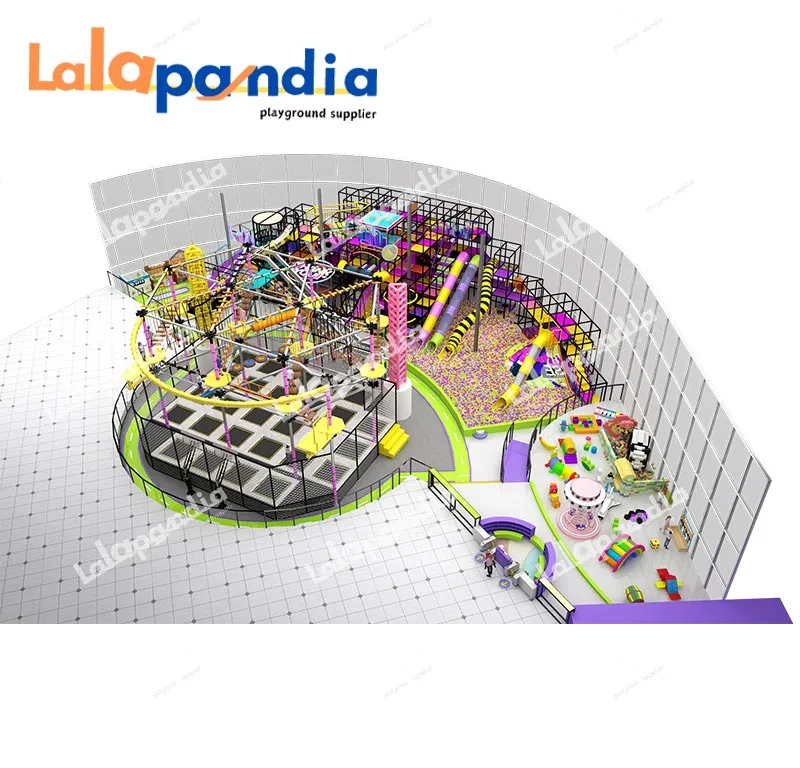
The LALAPANDIA design team worked from the mall’s architectural drawings and site plan to create a custom layout. Trampolines were positioned in the high‑ceiling section (4.2 m clearance). The ball pool and soft play occupied the lower‑ceiling area. Rope nets and climbing elements were routed around columns, using the structural supports as attachment points rather than obstacles. The carousel was placed near the entrance, visible from the mall concourse, acting as a visual lure for passing shoppers.
The thickened connecting aluminum trusses (30 cm × 30 cm) with eco‑certified non‑toxic color powder coating provided the structural framework, while high‑strength, corrosion‑resistant metal alloy buckles and tensile, fatigue‑resistant steel wire springs ensured durability under heavy use.
A residential trampoline might see 10 jumps a day. A commercial play center trampoline sees 10,000 jumps on a busy Saturday. The material specs in the mall installation were selected for commercial‑grade durability:
PP material professional jumping mats with spring covers to prevent finger injuries.
1000D high‑density PVC leather, 0.45 mm thickness, water‑ and oil‑proof, easy to clean.
Rust‑proof trampoline frames with tensile, fatigue‑resistant steel wire springs.
High‑density EPE foam blocks for ball pits, which meet ASTM fire resistance standards and retain their shape after years of compression.
The trampoline jumping mat includes a spring cover to prevent injuries. On residential trampolines, the springs are exposed. A child‘s foot can slip between the mat and the frame, or a finger can be pinched in the spring coil. The spring cover eliminates that pinch point entirely – a small detail that significantly reduces injury claims.
The mall operator initially assumed capacity was simply the sum of each equipment’s max users. LALAPANDIA‘s team pointed out that the real constraint is the entrance/exit flow, the café seating, and the supervision lines of sight. For the 450 m² center, the practical maximum occupancy was set at 50‑100 children – a figure that matched the site’s fire code and staffing plan.
The operator also discovered that commercial indoor amusement centers require scheduled maintenance that residential equipment never needs: tightening spring attachments, inspecting netting for wear, testing projection interactive sensors, and cleaning EPE foam blocks. The mall‘s operating budget included a line item for a part‑time maintenance technician – a decision that prevented the slow degradation that turns a clean play center into a worn‑out liability.
LALAPANDIA also offers a Butler Management solution that includes furniture, arts and crafts, children‘s play equipment, inflatable toys, gifts, and party supplies – not just the play structures. For the mall operator, this meant the play center could host birthday parties without contracting separate vendors for decorations, invitations, or party favors. The all‑in‑one supply chain reduced the operator’s vendor management overhead from six contracts to one.
The mall installation included projection interactive games integrated into the trampoline zone – a feature LALAPANDIA pioneered by bringing digital play into physical playgrounds. Children hit moving virtual targets projected onto the trampoline mats, play interactive ball games, and compete on digital climbing walls.
For the operator, digital play had two commercial effects. First, it extended the age range upward: teenagers who consider ball pits “too young” will stay for digital climbing challenges. Second, it generated shareable content – parents filming their children on interactive games posted videos to social media, providing organic marketing without ad spend.
[Image: Projection interactive game integrated into a trampoline zone, showing children jumping onto virtual targets projected onto the mat surface]
LALAPANDIA (Wenzhou Aode Amusement Equipment Co., Ltd.) is a factory‑direct supplier of high‑quality indoor kids‘ playground equipment, offering one‑stop operational solutions from concept design to installation to operations manual. The company integrates R&D, design, production, OEM, and installation, serving clients ranging from first‑time operators to large‑scale entertainment brands.
The Fun kids indoor amusement center equipment is manufactured using top‑tier materials that meet strict safety standards (ASTM, EN, SGS‑tested) and can be custom‑designed to fit any location, theme, or specific need. The product line includes trampoline zones, ball pools, slides, climbing walls, rope nets, carousels, soft play elements, ninja courses, and sky riders – all backed by LALAPANDIA‘s “Butler Management” support model.
For an indoor amusement centers project that increased mall foot traffic by 40 % in its first month, the equipment mix, safety certification stack, and site‑specific customization turned 450 m² of empty retail space into a family destination that filled the mall‘s middle on weekday afternoons.
[Request a quote from LALAPANDIA]
Contact LALAPANDIA with your available floor space (m²) and target age range to receive a custom equipment mix recommendation and site layout proposal.
GET A QUOTE
 中文
中文 English
 Pусский
 Français
 Español